
Table of Contents
Is Hummus Good for You? Nutrition, Benefits, Risks, and Healthy Ways to Eat It
Hummus has become one of the most popular healthy dips in the United States, found everywhere from grocery stores to restaurants. With the rise of plant-based diets and Mediterranean-style eating, hummus is often promoted as a nutritious alternative to traditional dips such as ranch dressing or cheese-based spreads.
But is hummus actually good for you? Yes—hummus can be a nutritious choice when consumed in appropriate portions and made with quality ingredients. It provides plant-based protein, fiber, unsaturated fats, and several vitamins and minerals.
In this guide, we’ll look at the nutrition, potential benefits, possible downsides, and healthy ways to enjoy hummus.
What Is Hummus Made Of?
Traditional hummus is a simple dip made from:
- Chickpeas (garbanzo beans)
- Tahini (sesame paste)
- Olive oil
- Lemon juice
- Garlic
These ingredients fit well within a Mediterranean-style eating pattern, which emphasizes vegetables, legumes, whole grains, nuts, seeds, fish, and unsaturated fats.
Hummus can also be paired with other nutritious foods. For example, it can be served alongside whole grains or quinoa. If you are interested in quinoa as a nutritious grain alternative, read more about the health benefits of quinoa.
Nutritional Profile of Hummus
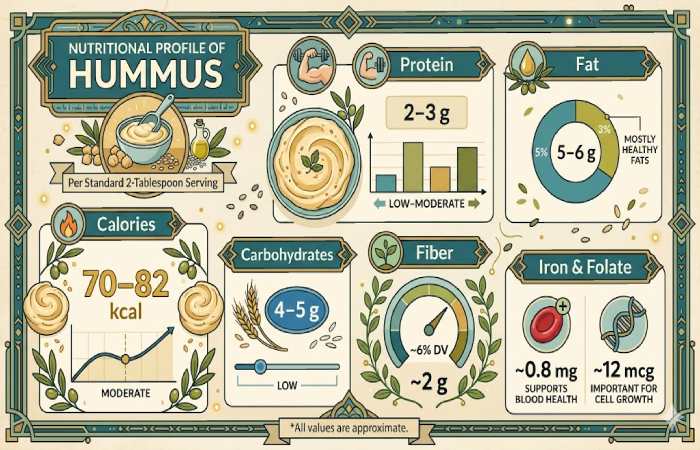
A standard 2-tablespoon serving of hummus generally contains approximately:
| Nutrient | Amount (Approx.) | Contribution |
|---|---|---|
| Calories | 70–82 kcal | Moderate |
| Protein | 2–3 g | Low–moderate |
| Fat | 5–6 g | Mostly unsaturated |
| Carbohydrates | 4–5 g | Relatively low |
| Fiber | ~2 g | Contributes to daily intake |
| Iron | ~0.8 mg | Supports normal blood function |
| Folate | ~12 mcg | Supports cell growth and metabolism |
Exact amounts vary by recipe and brand.
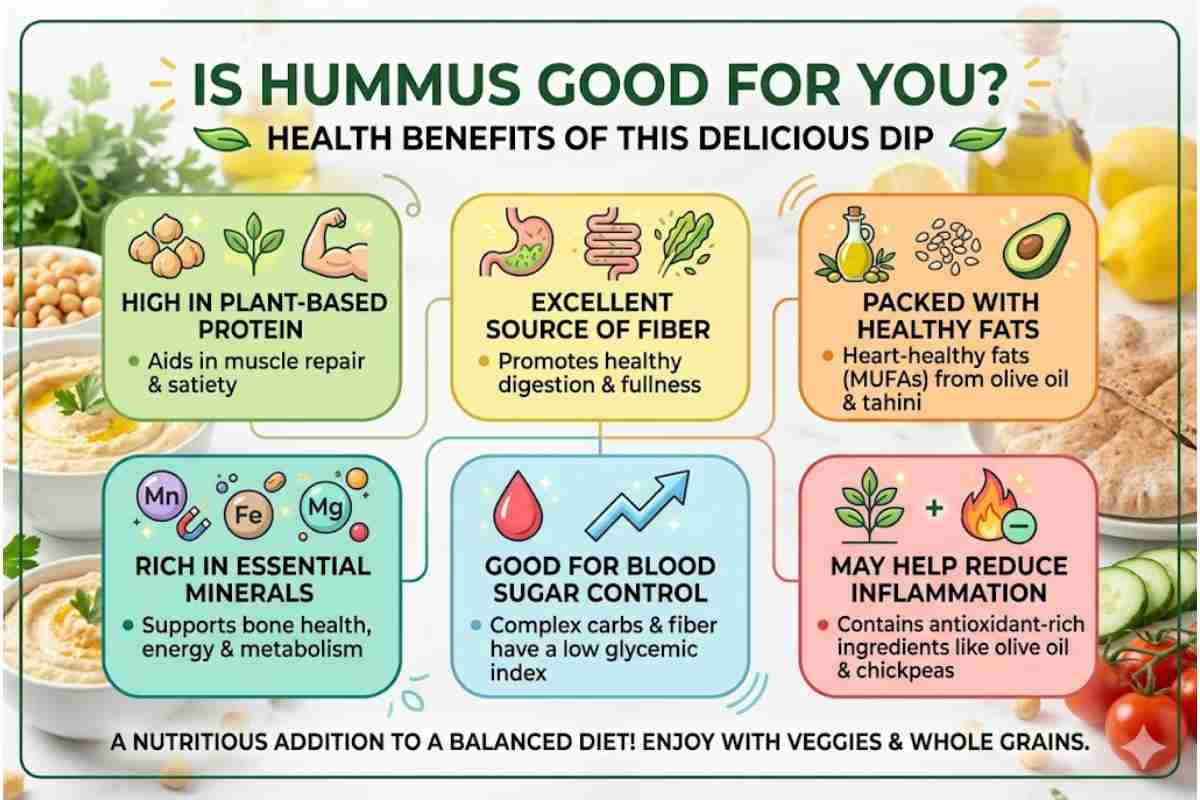
Hummus provides fiber, plant-based protein, and minerals such as iron and magnesium. Tahini and olive oil also contribute unsaturated fats.
The nutritional value of a complete meal matters more than any individual food, so hummus works best as part of a varied diet.
Health Benefits of Hummus
1. Supports Heart Health
Hummus contains unsaturated fats from ingredients such as olive oil and tahini. Replacing some foods high in saturated fat with foods containing unsaturated fats may support healthier cholesterol levels and cardiovascular health.
The chickpeas in hummus also provide fiber, which can contribute to a heart-healthy eating pattern.
For another example of a nutrient-rich food that can be included in a heart-conscious diet, see our guide to salmon calories and nutrition.
2. May Support Digestive Health
Chickpeas are a good source of dietary fiber. Fiber can:
- Promote regular bowel movements
- Support a healthy gut microbiome
- Contribute to digestive health
- Help increase feelings of fullness
Some of the fiber in chickpeas is fermented by gut bacteria, producing compounds such as short-chain fatty acids, including butyrate.
However, people who are not accustomed to eating many legumes may experience gas or bloating after eating hummus.
3. May Help Support Blood Sugar Management
Hummus is relatively low in carbohydrates and contains fiber, protein, and fat. These characteristics can make it a useful alternative to some highly refined carbohydrate-based dips and snacks.
Eating chickpeas and other legumes as part of a balanced diet may also support better blood glucose control.
However, hummus should not be described as a food that prevents blood sugar spikes in everyone or as a treatment for diabetes. Portion size and the foods eaten alongside it also matter.
If you are looking for healthier beverage choices, remember that products marketed as “diet” or “zero sugar” can have different nutritional profiles. You can learn more in our guide to Diet Dr Pepper nutrition.
4. May Support Weight Management
Hummus can be filling because it combines fiber, protein, and fat. These nutrients may help increase satiety, making hummus a useful addition to meals and snacks.
However, hummus is relatively calorie-dense because it contains tahini and, in many recipes, olive oil. Eating large portions can therefore add significant calories.
For weight management, the overall diet and total calorie intake are more important than any single food.
5. Provides Plant-Based Protein
Hummus provides plant-based protein from chickpeas and tahini.
It can be particularly useful for people following vegetarian or vegan eating patterns, although hummus alone is not a high-protein food. Pairing it with other protein-rich foods throughout the day can help meet individual protein requirements.
Is Hummus Good for Weight Loss?
Hummus can fit into a weight-management diet, but portion control matters.
| Factor | Potential Effect |
|---|---|
| Fiber | May increase fullness |
| Protein | Helps support satiety |
| Unsaturated fats | Can contribute to a satisfying meal |
| Calories | Can add up in large portions |
| Pairing | Vegetables can provide a nutrient-rich, lower-calorie option |
Instead of eating hummus directly from a large container, measuring out a reasonable serving can make portion control easier.
Is Hummus Good for People With Diabetes?
Hummus can be included in a diabetes-friendly eating pattern. Chickpeas contain fiber and protein, and hummus generally contains relatively little carbohydrate per serving.
However, the effect on blood glucose depends on the amount eaten and what it is paired with. Eating hummus with non-starchy vegetables, for example, is different from eating a large amount with refined crackers or white bread.
People with diabetes should consider their overall meal plan and individual blood glucose response rather than relying on one food to control blood sugar.
Potential Downsides of Hummus
While hummus can be nutritious, it is not perfect for everyone.
Common Concerns
| Issue | Explanation |
|---|---|
| Calories | Tahini and olive oil make hummus relatively energy-dense |
| Sodium | Some packaged varieties contain significant amounts of added salt |
| Allergies | Tahini contains sesame, a major food allergen |
| Digestive issues | Chickpeas may cause gas or bloating in some people |
| Portion size | Large servings can substantially increase calorie intake |
Always check the nutrition label when buying packaged hummus, particularly if you are trying to limit sodium.
Store-Bought vs. Homemade Hummus
| Feature | Store-Bought | Homemade |
|---|---|---|
| Convenience | High | Moderate |
| Sodium | Varies; can be higher | Easier to control |
| Ingredients | Varies by brand | Fully customizable |
| Taste | Consistent | Customizable |
| Nutrition | Varies by recipe | Depends on ingredients and portions |
Homemade hummus allows you to control the amount of salt, oil, and tahini. When buying packaged hummus, look for products with simple ingredients and compare sodium and calorie levels between brands.
Hummus vs. Other Popular Dips
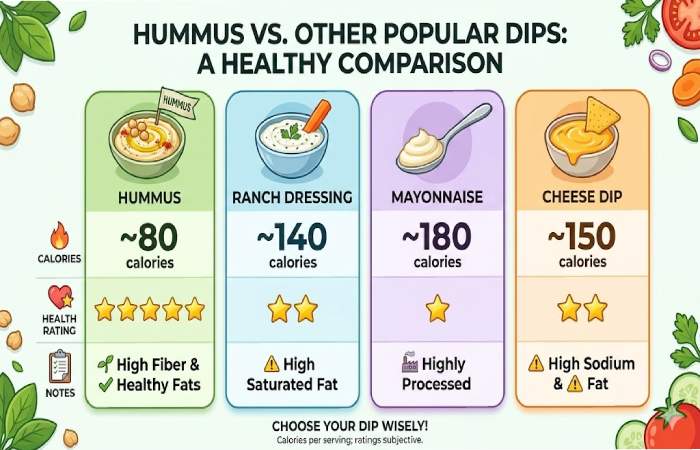
Hummus can be a nutritious alternative to some creamy dips, particularly when it replaces foods that are higher in saturated fat or sodium.
| Dip Type | Typical Characteristics | Notes |
|---|---|---|
| Hummus | Fiber, plant protein, unsaturated fat | Nutrient-dense option |
| Ranch dressing | Often higher in fat and sodium | Portion matters |
| Mayonnaise | High in fat and calories | Low in fiber |
| Cheese dip | Can be high in saturated fat and sodium | Nutritional value varies |
No single dip is automatically “healthy” or “unhealthy.” The ingredients, serving size, and overall dietary pattern all matter.
Best Foods to Eat With Hummus
Hummus can be paired with a variety of nutritious foods, including:
- Carrots
- Celery
- Bell peppers
- Cucumbers
- Tomatoes
- Whole-grain crackers
- Whole-grain pita
- Whole-grain bread
- Salads
- Roasted vegetables
Fruit can also be part of a balanced diet, although it is not a traditional hummus pairing. For example, pineapple provides vitamin C and other nutrients. Read more about the useful properties of pineapple for more information about this fruit.
How Much Hummus Should You Eat Daily?
There is no universal daily amount of hummus that everyone should eat. A serving of around 2 tablespoons is commonly used on nutrition labels, while some people may comfortably eat 2–4 tablespoons as part of a meal or snack.
The appropriate amount depends on your calorie needs, dietary pattern, and what else you are eating.
If you are watching your calorie intake, remember that the calories from tahini and olive oil can add up when hummus is consumed in large portions.
Is Hummus Popular in the United States?
Hummus has become a mainstream food in the United States. Its popularity has been supported by growing interest in:
- Plant-based eating
- Vegetarian and vegan diets
- Mediterranean-style eating
- High-fiber foods
- Convenient healthy snacks
It is now widely available in grocery stores, restaurants, cafés, and prepared-food sections.
What Do Nutrition Experts Say?
Nutrition professionals generally consider hummus a nutritious food that can fit into a balanced eating pattern.
The main recommendations are to:
- Pay attention to serving size
- Choose varieties with reasonable sodium levels
- Pair hummus with vegetables and other nutrient-rich foods
- Consider the overall quality of the diet
- Check the ingredient and nutrition labels of packaged products
It is also useful to distinguish hummus from highly processed snack foods and beverages that may be marketed as healthier simply because they contain fewer calories or less sugar.
For example, some people may choose low-sugar beverages such as diet soft drinks, while others prefer unsweetened water or other drinks. You can learn more about different types of diet ginger ale and how these products fit into an overall diet.
Pros and Cons
Yes—hummus can be a healthy addition to your diet.
Pros
- Provides dietary fiber
- Contains plant-based protein
- Provides unsaturated fats
- Contains nutrients such as iron and folate
- Works well with vegetables and whole grains
- Fits vegetarian and vegan eating patterns
- Can be included in Mediterranean-style eating
Cons
- Can be calorie-dense
- Packaged varieties may contain considerable sodium
- Tahini contains sesame, a major allergen
- May cause digestive discomfort in some people
- Large portions can contribute significant calories
What About Hummus and Other Trendy Health Foods?
Hummus is one example of a food that can fit into a balanced eating pattern without needing to be treated as a miracle food.
A healthy diet can include a wide variety of foods, including legumes, vegetables, fruits, whole grains, nuts, seeds, fish, and other protein sources.
Some newer products, such as mushroom-based beverages, are also marketed for their potential wellness benefits. If you are interested in one such product, you can read about RYZE Mushroom Coffee and consider its ingredients and nutritional profile alongside the rest of your diet.
Conclusion
Hummus can be a nutritious and versatile dip when eaten in appropriate portions. Made from chickpeas, tahini, olive oil, lemon juice, and garlic, it provides a combination of fiber, plant-based protein, unsaturated fats, and several important nutrients.
It can support a balanced eating pattern and works especially well when paired with vegetables, whole grains, or other nutrient-rich foods.
However, hummus is not a miracle food. Store-bought versions can vary considerably in calories, sodium, and ingredients, while large portions can contribute significant calories.
Overall, choosing a quality hummus, watching portion sizes, and pairing it with wholesome foods can make it a smart and enjoyable part of a balanced diet.