
Self-loading exercises—also known as bodyweight exercises—have become increasingly popular because they allow people to train without expensive sports equipment or access to a gym. They can be especially useful when you want to exercise at home, travel frequently, or prefer simple workouts that require little space.
Well-developed arms and a strong torso are often associated with strength and fitness. Because of this, exercises such as biceps curls are among the most popular movements in gyms. However, you do not always need dumbbells or barbells to develop strength. Bodyweight training can provide an effective alternative when performed with appropriate technique and progression.
Table of Contents
The Importance of Self-Loading Exercises
Self-loading exercises are movements in which you use your own body weight as resistance. In other words, your body provides the load that your muscles must move or stabilize against.
Because no external equipment is required for many bodyweight exercises, they can be performed in a variety of locations. However, bodyweight training can still be challenging, particularly when exercises involve moving a large portion of your body weight.
These exercises require proper technique to reduce unnecessary stress on the muscles and joints. Progression should be gradual, especially when learning difficult movements.
For example, during pull-ups, your arms, shoulders, back, and core work together to move and stabilize your body against gravity.
Bodyweight training can also be combined with other forms of exercise. If you enjoy gym-based workouts, you can learn more about the benefits of going to the gym and use bodyweight exercises as a complementary part of your routine.
Push-Ups: A Classic Self-Loading Exercise
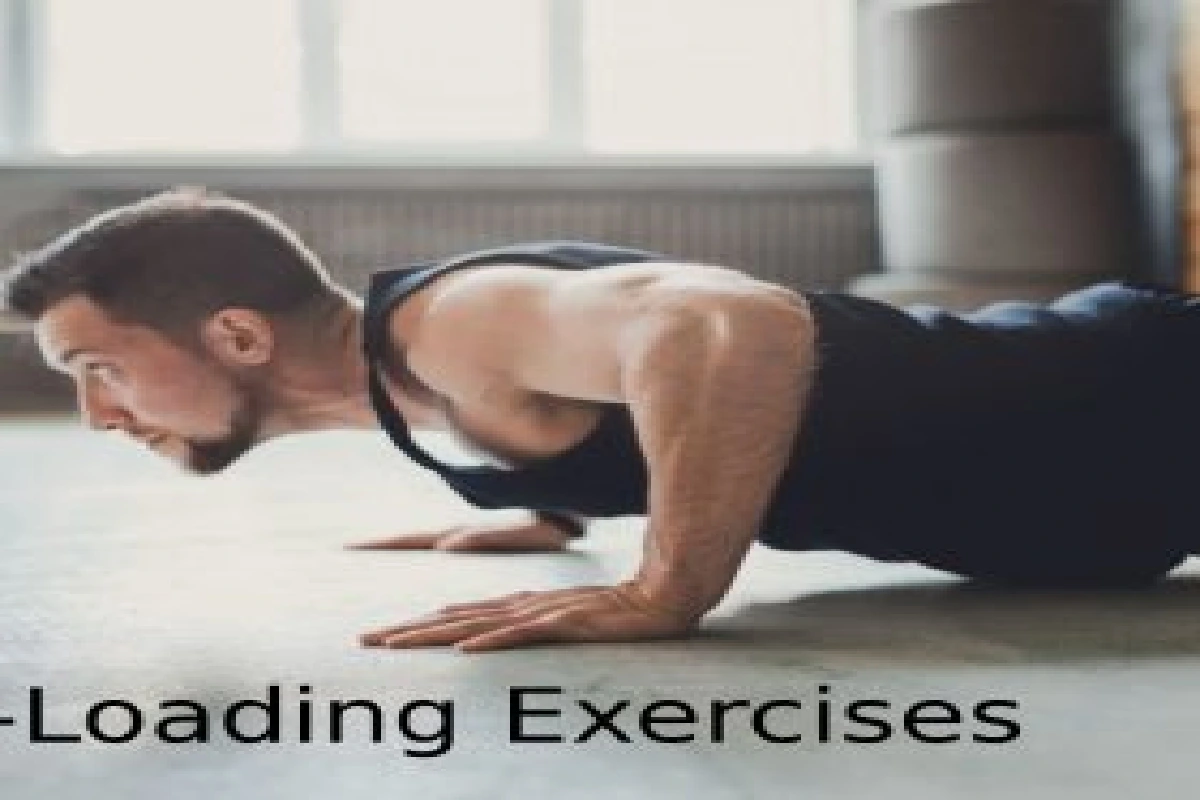
An excellent exercise for working with your body weight is the push-up. It is sometimes underestimated, but it can provide a challenging workout for several muscle groups.
Push-ups primarily involve the chest, shoulders, and triceps while also requiring the core muscles to stabilize the body. They can be used in both strength and muscular-endurance workouts.
One of the biggest advantages of push-ups is the number of variations available. Beginners can start with easier versions, such as incline push-ups, while more experienced individuals can progress to variations that increase the challenge.
Common Push-Up Variations
| Variation | Difficulty | Main Focus |
|---|---|---|
| Wall Push-Up | Beginner | Basic pushing strength |
| Incline Push-Up | Beginner | Chest and triceps |
| Standard Push-Up | Intermediate | Full upper-body strength |
| Close-Grip Push-Up | Intermediate | Triceps emphasis |
| Decline Push-Up | Advanced | Greater upper-body challenge |
Choosing an appropriate variation allows you to gradually increase the difficulty without immediately attempting an advanced movement.
Self-Loading Triceps Dips
Another bodyweight exercise for the arms is the triceps dip. Depending on how it is performed, dips can place significant demands on the triceps, chest, and shoulders.
When performing dips, maintain controlled movement and avoid forcing an excessive range of motion. The appropriate depth depends on your mobility, strength, and shoulder comfort.
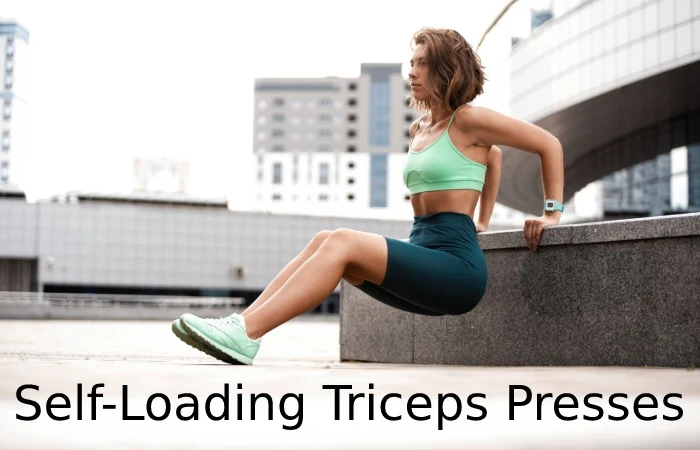
Dips should be performed with caution because excessive depth or poor control can place unnecessary stress on the shoulders. Beginners may benefit from assisted variations before progressing to more demanding versions.
Self-Loading Pull-Ups
When it comes to self-loading exercises, pull-ups are one of the most challenging movements for many beginners.
The grip can vary depending on the exercise. A supinated grip places the palms toward you, while a pronated grip places the palms away from you. Different grip positions can change how the muscles are recruited.
Although you may feel pull-ups primarily in your arms, the movement also requires substantial involvement from the back and core.
Pull-Up Progressions
| Exercise | Difficulty | Purpose |
|---|---|---|
| Assisted Pull-Up | Beginner | Learn movement pattern |
| Negative Pull-Up | Beginner–Intermediate | Build pulling strength |
| Standard Pull-Up | Intermediate | Develop upper-body strength |
| Chin-Up | Intermediate | Strong arm and back involvement |
If you cannot perform a full pull-up yet, assisted variations can help you gradually develop the required strength.
Self-Loading Inverted Rowing
An alternative to pull-ups is the inverted row. This movement trains the upper back, arms, and core while allowing you to adjust the difficulty.
If performing an inverted row at home using a table or other household structure, safety should come first. The furniture must be extremely stable and capable of safely supporting your body weight. Do not use a lightweight, folding, unstable, or damaged table.
To perform the movement, position yourself underneath a secure horizontal surface and grip it firmly. Pull your chest toward the surface while keeping your body controlled and aligned.
Avoid excessive swinging or twisting. Keep your core engaged and lower your body slowly rather than allowing yourself to drop suddenly.
If you do not have a safe setup, it is better to choose another bodyweight pulling exercise or use appropriate exercise equipment.
Benefits of Bodyweight Training
Self-loading exercises offer several advantages, particularly for people who want a convenient workout.
| Benefit | Explanation |
|---|---|
| No Gym Required | Can be performed at home or outdoors |
| Minimal Equipment | Many exercises require no equipment |
| Convenient | Easy to fit into a busy schedule |
| Scalable | Exercises can be modified for different fitness levels |
| Functional | Uses multiple muscle groups together |
| Cost-Effective | Reduces the need for expensive equipment |
Bodyweight training can also be incorporated into different exercise styles. As fitness preferences continue to evolve, exploring different workout trends can provide additional ideas for keeping your routine varied.
Bodyweight Exercises for Building Muscle
Bodyweight exercises can support muscle development when they provide enough resistance and are progressed appropriately.
You can make an exercise more challenging by increasing repetitions, slowing the movement, changing leverage, increasing the range of motion when appropriate, or progressing to a more difficult variation.
However, muscle growth also depends on adequate nutrition, recovery, training volume, and individual factors. If your primary goal is muscle gain, you can also learn more about how to gain muscle through a combination of training and nutrition.
How to Progress With Self-Loading Exercises
Progressive overload does not always require adding heavier weights. With bodyweight exercises, you can gradually increase the challenge in several ways.
| Progression Method | Example |
|---|---|
| Increase Repetitions | 8 push-ups → 12 push-ups |
| Increase Sets | 2 sets → 3 sets |
| Increase Difficulty | Incline push-up → standard push-up |
| Improve Control | Slower lowering phase |
| Increase Range | Greater comfortable range of motion |
| Reduce Assistance | Assisted pull-up → standard pull-up |
Progress gradually rather than attempting advanced exercises before you have developed the necessary strength and control.
Safety Tips for Self-Loading Exercises
Bodyweight exercises are not automatically risk-free. Poor technique, excessive training volume, or attempting movements beyond your current ability can lead to pain or injury.
Keep these basic principles in mind:
- Warm up before demanding workouts.
- Use controlled movements.
- Choose exercises appropriate for your fitness level.
- Progress gradually.
- Allow adequate recovery between challenging sessions.
- Stop if you experience sharp or unusual pain.
- Use stable and secure equipment when an exercise requires household furniture or other supports.
If you have an existing injury or medical condition, consider getting professional advice before starting a demanding exercise program.
Conclusion
Self-loading exercises provide a convenient way to develop strength, endurance, coordination, and overall physical fitness without relying on a traditional gym or expensive equipment. Exercises such as push-ups, dips, pull-ups, and inverted rows can train multiple muscle groups while allowing you to adjust the difficulty to your fitness level.
The key is to focus on proper technique, gradual progression, adequate recovery, and exercises that match your current abilities. With a consistent approach, bodyweight training can be a valuable part of a balanced fitness routine.