
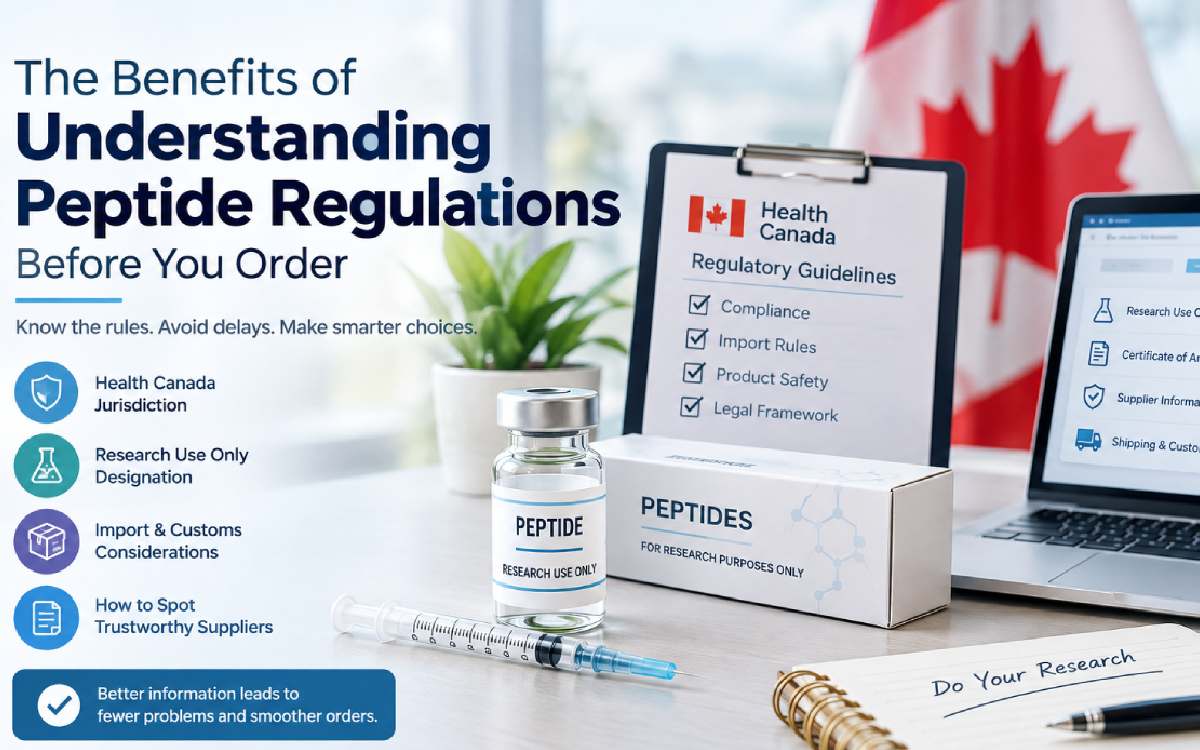
Nobody reads the regulatory fine print before buying a Bluetooth speaker. The return policy, sure. Not what Health Canada’s jurisdiction covers or which compounds attract customs attention. For a Bluetooth speaker, that’s sensible. For peptide compounds, skipping that step is how a perfectly reasonable purchase becomes an expensive lesson that arrives in an envelope from a government agency instead of a shipping company.
Here’s what the actual situation looks like, and why knowing it upfront saves a genuinely irritating amount of trouble.
Table of Contents
Peptides in Canada Occupy a Specific Legal Space
Peptides aren’t scheduled controlled substances in Canada. They’re also not unregulated. Health Canada controls what suppliers can sell, how they describe it, and what claims they’re allowed to make without attracting serious regulatory attention. Most peptides live in research-use territory, which explains why product pages sometimes read like they were assembled by a committee of lawyers who lost a bet. Stilted phrasing. Conspicuous absence of anything that sounds like a health claim. Descriptions that technically describe the product without actually describing the product.
That’s not the supplier being sketchy. That’s the supplier not wanting a letter from a government agency. It’s compliance. Knowing that going in makes the supplier descriptions considerably more legible.
Why the Research-Use Designation Matters
Research use only” sounds alarming until someone explains what it actually means. It means the compound hasn’t completed the clinical drug approval process. That’s it. That’s the whole statement. It says nothing about whether the research behind the compound is serious, substantial, or worth reading. Plenty of peptides wearing that label have genuinely impressive literature behind them.
What it does mean, practically speaking, is that nobody is standardizing the sourcing environment on your behalf. Quality varies between suppliers in ways it wouldn’t in a regulated market. The buyer is now the quality control department, whether they signed up for that job or not. For anyone looking to buy peptides in Canada from a domestic supplier, understanding what a good certificate of analysis looks like before the order is placed is considerably more useful than learning it after.
Import Complications Are Surprisingly Common
International orders aren’t automatically prohibited. They’re automatically more complicated. Customs scrutiny varies by compound, by quantity, and sometimes by factors that produce zero explanation in the paperwork. A flagged package doesn’t arrive with a note explaining why. Resolving a held shipment involves exactly the kind of waiting and uncertainty nobody wants from what should be a routine transaction. Domestic Canadian suppliers skip the import question entirely, which is a practical argument for buying local that has nothing to do with brand loyalty.
Better Information Produces Better Questions
Learning the rules is like getting the cheat code. Suddenly supplier websites that used to look impressive start reading like a guy at a party who keeps mentioning his yacht but won’t say where it’s docked.
The tells are everywhere once you know what to look for. Reluctance to explain their compliance position. Certificates that exist but somehow say nothing. Answers to direct questions that are technically words but don’t actually convey information. That’s one type. The other type has a gorgeous website, bold claims, beautiful branding, and then goes weirdly quiet the moment anyone asks something specific.
Different presentation. Same problem. Both easier to spot once the framework exists.
Regulations Change, and It’s Worth Staying Loosely Aware
Gray areas get reclassified. Import permissions that are currently permissive can tighten with some public notice. Staying loosely current takes about 15 minutes monthly. This doesn’t mean you have to be a regulatory expertise, just avoid situations where a significant purchasing decision rests on an understanding that became outdated months ago. The compounds that import cleanly today may have different status next year. That’s worth knowing before it becomes relevant by surprise.
Most people skip the regulatory research step entirely. That’s understandable given everything competing for attention. The ones who don’t tend to have noticeably fewer frustrating purchasing experiences, which is a solid return on roughly 30 minutes of reading.