
Metformin is one of the most commonly prescribed medications in the United States for managing Type 2 Diabetes and insulin resistance. Approved by the U.S. Food and Drug Administration, it is widely recommended as a first-line treatment alongside lifestyle changes such as diet and exercise. For many patients, understanding whether metformin is actually working can feel unclear at first, since results develop gradually rather than instantly. This guide provides a clear, structured explanation of the signs metformin is working, combining medical insights with practical indicators you can monitor.
Table of Contents
Understanding How Metformin Works
Metformin belongs to a class of drugs called biguanides and works primarily by lowering glucose production in the liver, improving insulin sensitivity, and reducing glucose absorption in the intestines. Unlike insulin injections, it does not increase insulin levels directly. Instead, it helps your body use insulin more efficiently, which leads to better blood sugar control over time.
In the U.S., it is commonly prescribed for:
- Type 2 diabetes
- Prediabetes
- Polycystic ovary syndrome (PCOS) (off-label use)
Because of its safety profile, affordability, and effectiveness, metformin is often the starting medication before moving to other treatments.
How Long Does It Take for Metformin to Work?
Metformin begins working within a few days, but noticeable improvements take time. Many people expect quick results, but the medication works gradually by improving the body’s metabolic processes.
Metformin Effect Timeline
| Timeframe | Expected Changes |
| 1–7 days | Initial drop in blood glucose levels |
| 2–4 weeks | Improved fasting blood sugar |
| 2–3 months | Noticeable HbA1c reduction |
| 3–6 months | Weight stabilization or slight loss |
Most doctors in the U.S. evaluate effectiveness after about 3 months using HbA1c testing.
Key Signs Metformin Is Working
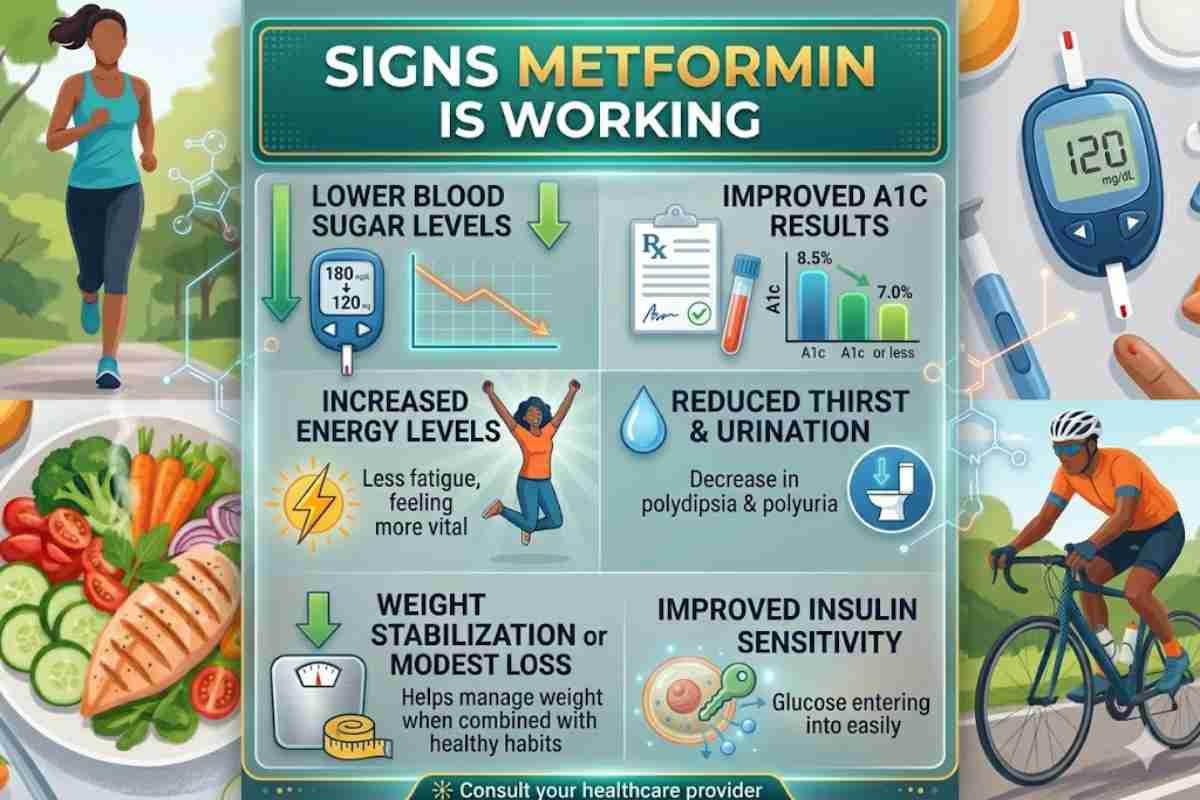
One of the clearest ways to determine whether metformin is working is by observing consistent improvements in your body and lab results. These changes may be subtle at first but become more noticeable over time.
1. Lower Blood Sugar Levels
The most direct and measurable sign is reduced blood glucose levels. You may notice that your fasting blood sugar improves, and post-meal spikes are less dramatic. If you regularly monitor your levels using a glucometer or continuous glucose monitor, trends will show more stability and fewer extreme highs.
2. Improved HbA1c Levels
HbA1c reflects your average blood sugar over the past 2–3 months. A decrease in HbA1c is one of the strongest indicators that metformin is effective. In the United States, many healthcare providers aim for a target HbA1c below 7%, though this varies depending on individual health conditions.
3. Reduced Symptoms of High Blood Sugar
Before treatment, high blood sugar can cause symptoms like excessive thirst, frequent urination, fatigue, and blurred vision. As metformin begins to work, these symptoms gradually improve. Many patients report feeling less tired and more comfortable throughout the day.
Symptom Improvement Indicators
| Symptom | Before Metformin | After Effective Treatment |
| Frequent urination | Very common | Reduced frequency |
| Excessive thirst | Persistent | Noticeably lower |
| Fatigue | Daily exhaustion | Improved energy |
| Blurred vision | Occasional | Stabilized |
4. Weight Stability or Modest Loss
Metformin is often associated with mild weight loss, especially in overweight individuals. While it is not a weight-loss drug, it can reduce appetite and improve how the body processes glucose. Many patients either lose a small amount of weight or avoid gaining additional weight.
5. Improved Insulin Sensitivity
Insulin resistance is a key problem in type 2 diabetes. When metformin is working, your body becomes more responsive to insulin, allowing glucose to enter cells more efficiently. This leads to fewer blood sugar spikes and more consistent energy levels.
6. More Stable Energy Levels
Before starting metformin, fluctuating blood sugar levels can cause energy crashes. Once the medication starts working, many people experience more stable energy throughout the day, with fewer highs and lows after meals.
7. Better Overall Lab Results
In addition to glucose control, metformin may improve other health markers such as cholesterol levels and liver function. These improvements are often seen in routine blood tests ordered by your doctor.
Lab Improvements to Watch
| Test | Expected Change |
| HbA1c | Decreases over 2–3 months |
| Fasting glucose | Moves toward normal range |
| Cholesterol | May improve slightly |
| Liver enzymes | Stabilize in some patients |
Signs Metformin May Not Be Working
While metformin is effective for many people, it does not work equally well for everyone. Recognizing when it’s not working is just as important.
If your blood sugar levels remain high despite taking the medication as prescribed, or if your HbA1c does not improve after 3–6 months, it may indicate that adjustments are needed. Persistent symptoms like fatigue, thirst, or frequent urination are also warning signs.
Warning Signs
| Indicator | What It Suggests |
| No HbA1c improvement | Poor long-term control |
| लगातार high glucose | Ineffective dosage or response |
| Continued symptoms | Ongoing hyperglycemia |
| Weight gain | Possible insulin resistance |
| No change after months | Need treatment adjustment |
Doctors may respond by increasing the dose, switching to extended-release metformin, or adding another medication.
Factors That Influence Effectiveness
Metformin’s effectiveness depends on several lifestyle and biological factors. Taking the medication alone is not enough—your daily habits play a major role in how well it works.
Diet is one of the biggest influences. High sugar and processed foods can counteract the benefits of metformin. Physical activity improves insulin sensitivity and enhances the drug’s effectiveness. Consistency is also critical; missing doses can significantly reduce results.
Key Factors
| Factor | Impact on Metformin |
| Diet | Poor diet reduces effectiveness |
| Exercise | Enhances insulin sensitivity |
| Dosage | Incorrect dose limits results |
| Adherence | Skipping doses reduces benefit |
| Health conditions | May affect drug response |
Common Side Effects
Metformin is generally safe, but mild side effects are common, especially at the beginning of treatment. These usually improve as your body adjusts.
Side Effects Overview
| Side Effect | Frequency | Notes |
| Nausea | Common | Temporary |
| Diarrhea | Common | Improves over time |
| Appetite loss | Common | May aid weight loss |
| Metallic taste | Occasional | Mild |
| Vitamin B12 deficiency | Long-term | Monitor levels |
Maximizing Metformin Results
To get the best results from metformin, it should be combined with healthy lifestyle habits. Eating a balanced diet rich in fiber, exercising regularly, and taking the medication consistently are all essential steps.
Monitoring your blood sugar regularly helps you track progress and identify patterns. In the U.S., healthcare providers often recommend checking levels daily or using a continuous glucose monitor for better insights.
When to Consult a Doctor
You should speak with your healthcare provider if you notice no improvement after several months, experience severe side effects, or have consistently high blood sugar readings. Regular follow-ups, typically every 3 months, are standard practice in the United States to assess HbA1c and adjust treatment if needed.
Summary of Signs Metformin Is Working
| Sign | What It Means |
| Lower blood sugar | Immediate improvement |
| Reduced HbA1c | Long-term control |
| Fewer symptoms | Better metabolic health |
| Weight stability | Improved glucose use |
| Stable energy | Balanced blood sugar |
| Better lab results | Overall health improvement |
Final Thoughts
Metformin remains a cornerstone treatment for managing Type 2 Diabetes in the United States. The most reliable signs that it is working include lower blood sugar levels, improved HbA1c, reduced symptoms, and more stable energy.
However, patience is key. Unlike fast-acting medications, metformin works gradually, with meaningful improvements typically appearing over 2–3 months. Combining the medication with proper diet, exercise, and consistent monitoring significantly increases its effectiveness.
If you’re unsure whether metformin is working for you, tracking your symptoms and lab results—and staying in regular contact with your healthcare provider—will give you the clearest answer.