
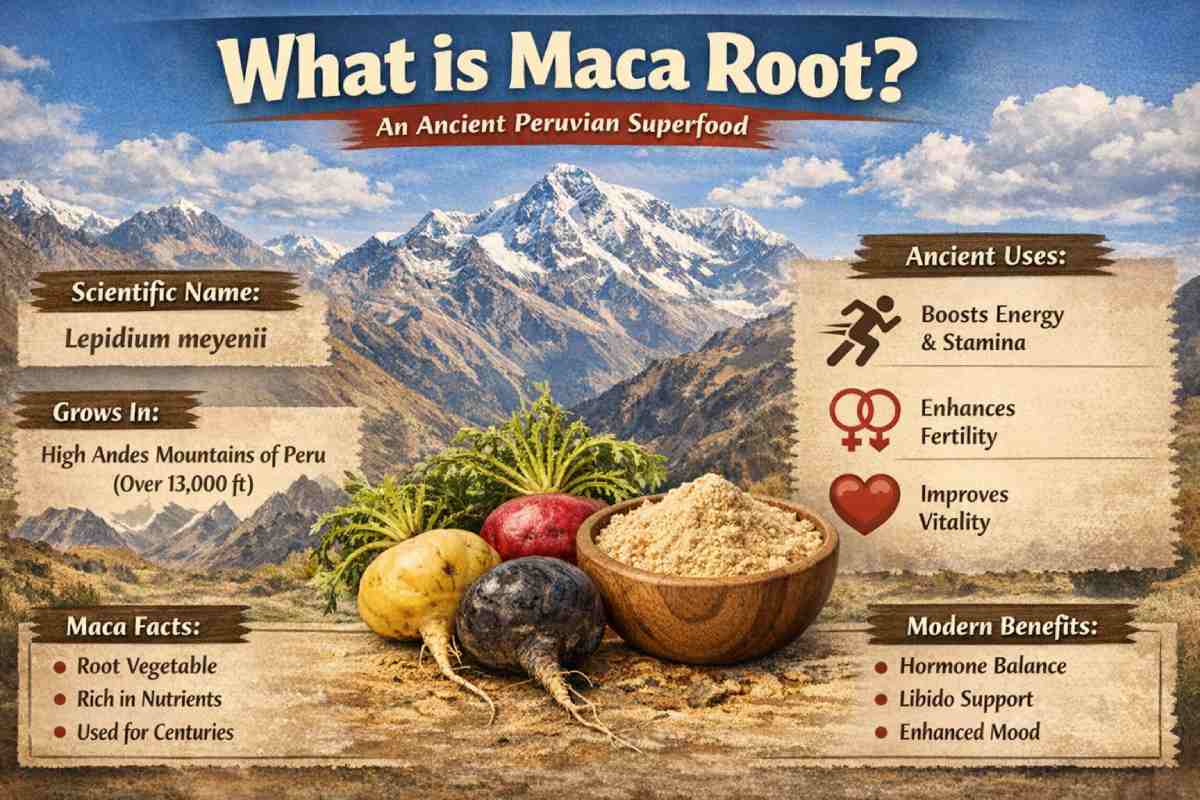
Maca has become one of the most popular natural supplements in the wellness world. Often called “Peruvian ginseng,” maca root comes from the plant Lepidium meyenii, which grows in the high Andes mountains of Peru. For thousands of years, indigenous communities have used maca as a food and medicinal plant to improve stamina, fertility, and overall vitality.
In modern health and nutrition circles, maca is commonly consumed as powder, capsules, or extracts, added to smoothies, oatmeal, or protein drinks. The root contains essential nutrients such as amino acids, iron, calcium, potassium, and plant compounds called flavonoids, which may contribute to its potential health benefits.
This article explores maca benefits, scientific research, nutritional value, potential side effects, and how to safely include maca in your diet. The guide combines paragraph explanations and structured tables for easy reading.
Table of Contents
What is Maca Root?
Maca is a cruciferous vegetable related to broccoli, cabbage, and kale. It grows at extremely high altitudes (over 13,000 feet) in Peru, where harsh climates make cultivation challenging. Despite these conditions, maca thrives and has been consumed as a staple food and medicinal herb for centuries.
Traditionally, maca was boiled or dried and used to increase energy and stamina. Modern research is exploring its potential role in hormonal balance, sexual health, mood regulation, and physical endurance. Although many benefits look promising, scientists emphasize that more large human studies are still needed.
Nutritional Value of Maca Root
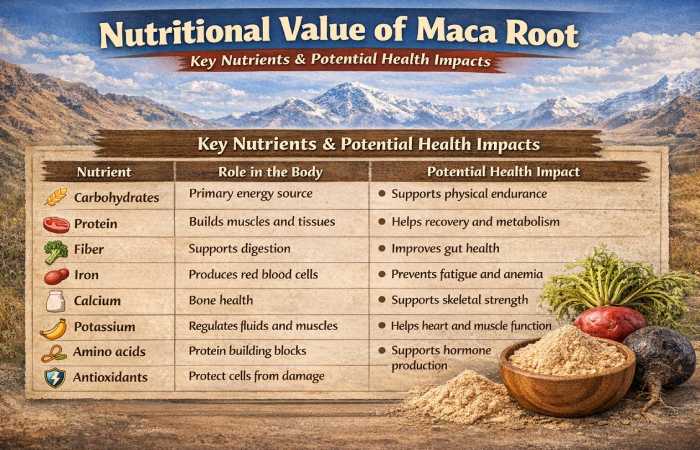
Maca root is considered a nutrient-dense superfood. While exact nutrient amounts vary depending on processing and brand, the root provides a mixture of carbohydrates, protein, fiber, and minerals.
Table: Key Nutrients in Maca Root
| Nutrient | Role in the Body | Potential Health Impact |
| Carbohydrates | Primary energy source | Supports physical endurance |
| Protein | Builds muscles and tissues | Helps recovery and metabolism |
| Fiber | Supports digestion | Improves gut health |
| Iron | Produces red blood cells | Prevents fatigue and anemia |
| Calcium | Bone health | Supports skeletal strength |
| Potassium | Regulates fluids and muscles | Helps heart and muscle function |
| Amino acids | Protein building blocks | Supports hormone production |
| Antioxidants | Protect cells from damage | Reduces oxidative stress |
According to nutrition data, one tablespoon of maca powder contains carbohydrates, small amounts of protein, fiber, and minerals that contribute to its nutritional profile.
Top Maca Benefits
Many people take maca supplements for energy, hormone support, or sexual health. Below are the most studied maca benefits.
1. Boosts Energy and Stamina
One of the most traditional uses of maca is improving energy levels and endurance. Indigenous populations in Peru have historically consumed maca before physically demanding activities.
Research suggests maca may help reduce fatigue and improve energy levels. A study involving individuals living at high altitude found that those who took maca reported better mood and energy compared with placebo groups.
Energy-Boosting Effects of Maca
| Factor | How Maca Helps |
| Physical endurance | May improve stamina during exercise |
| Fatigue reduction | Compounds may reduce exercise-induced fatigue |
| ATP production | Supports cellular energy generation |
| Adaptogenic properties | Helps body cope with stress |
Because maca is not a stimulant like caffeine, the energy boost tends to be gradual rather than sudden.
2. Improves Libido and Sexual Health
One of the most well-known maca benefits is its effect on sexual desire. Several small studies suggest maca may improve libido in both men and women.
In research involving individuals experiencing sexual dysfunction due to antidepressants, taking about 3,000 mg of maca daily improved sexual function compared with placebo.
Sexual Health Benefits of Maca
| Benefit | Research Findings |
| Increased libido | Studies suggest higher sexual desire |
| Improved sexual satisfaction | Observed in some clinical trials |
| Better erectile function | Small trials show positive effects |
| Enhanced sexual arousal | Reported by women in studies |
However, scientists emphasize that more large clinical trials are needed to confirm these results.
3. Supports Male Fertility
Another promising area of research is maca’s potential effect on male reproductive health.
Studies show that maca supplementation may increase sperm concentration and overall semen quality, which can improve fertility potential.
Maca and Male Fertility
| Fertility Factor | Possible Effect |
| Sperm count | May increase sperm concentration |
| Semen quality | Improvements observed in small studies |
| Motility | Evidence mixed but promising |
| Reproductive hormone support | May support endocrine balance |
While these findings are encouraging, researchers note that evidence remains limited and further human studies are required.
4. Helps Balance Hormones
Maca is often considered an adaptogenic herb, meaning it may help the body adapt to stress and regulate hormone production.
Rather than directly altering hormone levels, maca may influence the endocrine system, helping the body maintain balance naturally.
Hormonal Balance Benefits
| Hormonal Area | Potential Effect |
| Endocrine system | Supports hormone regulation |
| Adrenal function | May reduce stress response |
| Female hormones | Helps with hormonal fluctuations |
| Reproductive hormones | Supports sexual health |
Traditional medicine has used maca to address irregular periods, PMS, and hormonal imbalance, though more clinical research is needed to validate these claims.
5. Reduces Menopause Symptoms
Women going through menopause often experience symptoms like hot flashes, mood changes, and sleep disturbances. Some studies suggest maca may help relieve these symptoms.
Research indicates that maca supplementation could reduce menopause-related discomfort and improve overall well-being.
Maca for Menopause Relief
| Symptom | Potential Benefit |
| Hot flashes | May reduce severity |
| Mood swings | Improves emotional balance |
| Sleep issues | May improve sleep quality |
| Low libido | Supports sexual desire |
These effects are believed to occur because maca supports hormone balance rather than acting as a hormone replacement.
6. Enhances Mood and Mental Well-Being
Maca contains flavonoids, plant compounds associated with improved mood and reduced anxiety.
Studies have shown that maca supplementation may help reduce symptoms of depression and anxiety, particularly in postmenopausal women.
Mental Health Benefits
| Benefit | Explanation |
| Mood improvement | Flavonoids may influence brain chemistry |
| Reduced anxiety | Possible increase in calming neurotransmitters |
| Cognitive support | May improve memory and focus |
| Stress resistance | Adaptogenic properties |
Although promising, these effects require further scientific confirmation.
7. Supports Heart Health
Some preliminary research suggests maca may help regulate blood pressure.
A small study involving postmenopausal women showed reduced diastolic blood pressure after maca supplementation, although the trial was small.
Cardiovascular Support
| Heart Health Factor | Possible Effect |
| Blood pressure | May lower diastolic pressure |
| Antioxidants | Protect blood vessels |
| Mineral content | Potassium supports heart function |
| Stress reduction | Indirect cardiovascular benefits |
These effects may result from maca’s antioxidant and anti-inflammatory properties.
8. Strengthens Immune Function
Maca contains plant compounds that may support immune health.
Immune System Benefits
| Component | Role |
| Antioxidants | Reduce oxidative stress |
| Plant sterols | Support immune response |
| Vitamins and minerals | Strengthen immunity |
| Anti-inflammatory compounds | Protect cells |
These nutrients may help the body defend against infections and inflammation.
How to Use Maca
Maca is available in several forms, making it easy to include in daily nutrition.
Common Forms of Maca
| Form | How It’s Used |
| Maca powder | Added to smoothies, oatmeal, or baking |
| Capsules | Convenient supplement form |
| Extracts | Concentrated herbal preparation |
| Maca flour | Used in cooking and baking |
Many studies use 1.5–3 grams of maca daily, though dosage can vary depending on individual health needs.
Possible Side Effects of Maca
Although maca is generally considered safe for most people, some individuals may experience mild side effects.
Potential Side Effects
| Side Effect | Description |
| Digestive discomfort | Stomach upset or bloating |
| Insomnia | Difficulty sleeping |
| Hormone sensitivity | May affect hormone-related conditions |
| Menstrual changes | Irregular cycles in some individuals |
People who are pregnant, breastfeeding, or have hormone-sensitive conditions should consult a healthcare professional before using maca supplements.
Who Should Avoid Maca?
Certain groups should be cautious when consuming maca.
Safety Considerations
| Group | Reason |
| Pregnant women | Insufficient safety research |
| Breastfeeding mothers | Limited data on effects |
| Hormone-sensitive cancers | Maca may affect hormone activity |
| Thyroid disorders | Contains compounds that may interfere with thyroid hormones |
Always consult a healthcare professional before starting any new supplement.
Maca Benefits vs Other Adaptogens
Many herbal supplements claim similar benefits. Here’s how maca compares with other adaptogens.
Maca vs Popular Adaptogens
| Adaptogen | Primary Benefit | Best For |
| Maca | Energy and hormone balance | Libido and stamina |
| Ashwagandha | Stress reduction | Cortisol control |
| Rhodiola | Fatigue resistance | Mental performance |
| Ginseng | Energy boost | Physical endurance |
Each adaptogen works differently, and some people combine them for broader wellness benefits.
Conclusion
Maca root is a nutrient-rich superfood with a long history in traditional medicine. Research suggests it may provide several health benefits, including improved energy, enhanced libido, hormone balance, better mood, and potential fertility support.
However, most studies remain small, and scientists continue investigating the full extent of maca’s health effects. While maca can be a valuable addition to a balanced diet, it should not replace medical treatments or professional advice.
If used responsibly, maca may serve as a natural supplement for energy, hormonal wellness, and overall vitality.