
Table of Contents
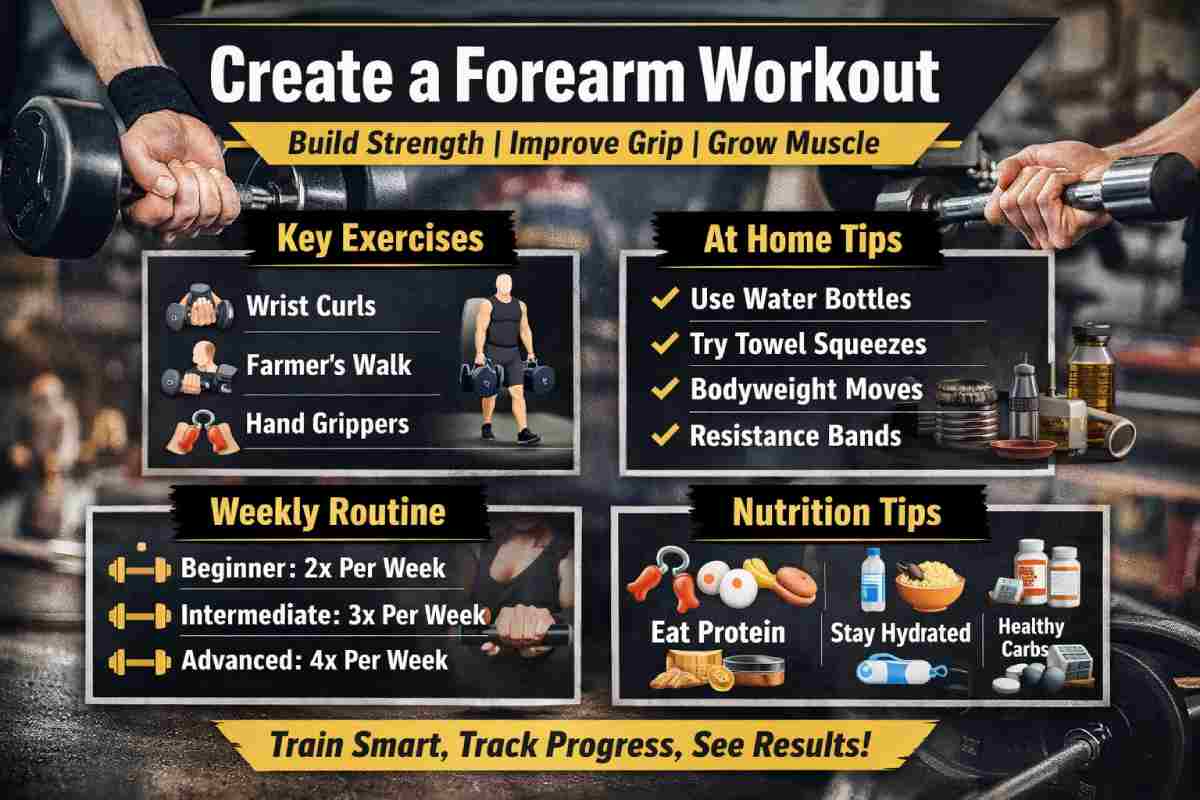
Introduction to Forearm Workouts
Forearm workouts are a critical yet often overlooked part of fitness routines in the United States. While many Americans focus on larger muscle groups like chest, back, and legs, the forearms play a vital role in grip strength, daily functionality, and athletic performance.
The forearm consists of muscles between the elbow and wrist that control hand and finger movement. These muscles are used in everyday activities like lifting groceries, typing, or opening jars. According to Harvard Health guide on forearm workouts, improving forearm strength directly enhances grip ability, which supports independence and overall physical function.
Anatomy of the Forearm Muscles
Understanding forearm anatomy helps target the right exercises for strength and hypertrophy.
| Muscle Group | Location | Function | Importance |
|---|---|---|---|
| Flexor Muscles | Inner forearm | Wrist and finger flexion | Grip strength |
| Extensor Muscles | Outer forearm | Wrist extension | Balance & stability |
| Brachioradialis | Upper forearm | Elbow flexion | Strength support |
| Pronators/Supinators | Deep forearm | Rotation of wrist | Functional movement |
The forearm contains 20+ muscles working together to control movement and strength.
Benefits of Forearm Workouts – USA Perspective
Forearm training offers multiple benefits beyond aesthetics.
| Benefit | Explanation | U.S. Relevance |
|---|---|---|
| Improved Grip Strength | Helps hold and lift objects | Important for daily tasks |
| Better Athletic Performance | Enhances sports like baseball, tennis | Popular U.S. sports |
| Injury Prevention | Strengthens wrists and elbows | Reduces gym injuries |
| Functional Strength | Supports daily activities | Improves independence |
| Muscle Balance | Complements upper body training | Prevents imbalances |
Research shows that grip strength is associated with overall health, mobility, and reduced risk of falls.
Grip Strength Data in the United States
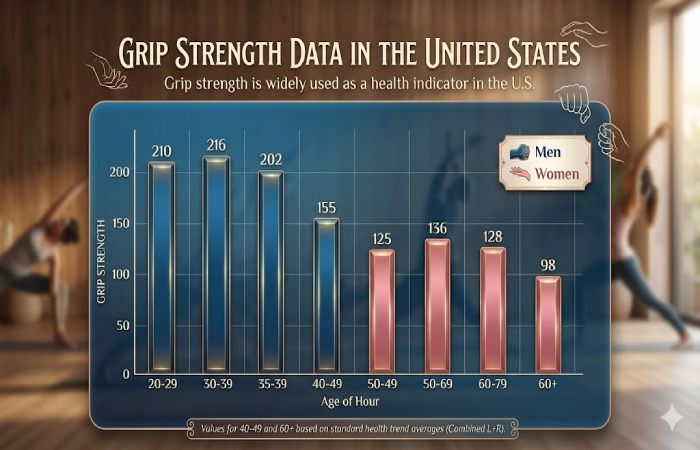
Grip strength is widely used as a health indicator in the U.S.
| Age Group | Average Grip Strength (Men) | Average Grip Strength (Women) |
|---|---|---|
| 20–29 | ~210 lbs | ~125 lbs |
| 30–39 | ~216 lbs (peak) | ~136 lbs (peak) |
| 40–49 | Declines gradually | Declines gradually |
| 60+ | Significant decline | Significant decline |
- Peak grip strength occurs between ages 30–39 in the U.S.
- Declining grip strength is linked to reduced mobility and health risks.
Best Forearm Workouts for Beginners
Beginners should start with simple, controlled movements.
| Exercise | Equipment | Reps | Benefits |
|---|---|---|---|
| Wrist Curls | Dumbbells | 10–15 | Builds flexors |
| Reverse Wrist Curls | Dumbbells | 10–15 | Targets extensors |
| Farmer’s Carry | Dumbbells | 30 sec | Improves grip |
| Hand Grippers | Tool | 10–20 | Strengthens fingers |
These exercises can be done at home or gym and are widely recommended in U.S. fitness programs.
Advanced Forearm Exercises for Growth
Once strength improves, advanced exercises help increase muscle size.
| Exercise | Difficulty | Target Area | Key Benefit |
|---|---|---|---|
| Dead Hangs | High | Grip & endurance | Builds strength |
| Plate Pinches | High | Thumb strength | Improves grip |
| Towel Pull-Ups | High | Full forearm | Functional strength |
| Zottman Curls | Medium | Full forearm | Muscle growth |
These movements are commonly used in U.S. strength training and CrossFit routines.
Forearm Workouts at Home (No Equipment)
Home workouts are popular in the United States due to convenience.
| Exercise | Method | Benefit |
|---|---|---|
| Towel Squeeze | Twist towel | Grip strength |
| Fingertip Push-Ups | Bodyweight | Finger strength |
| Wrist Rotations | Mobility | Injury prevention |
| Water Bottle Curls | Household item | Beginner-friendly |
These exercises are effective alternatives for people without gym access.
Gym-Based Forearm Workout Routine
Gym training allows for progressive overload.
| Exercise | Sets | Reps | Equipment |
|---|---|---|---|
| Barbell Wrist Curl | 3 | 10–15 | Barbell |
| Reverse Curl | 3 | 8–12 | Barbell |
| Cable Wrist Curl | 3 | 12–15 | Cable machine |
| Hammer Curl | 3 | 10–12 | Dumbbells |
Weekly Forearm Workout Plan
The U.S. Physical Activity Guidelines recommend strength training at least 2 days per week.
| Level | Frequency | Routine |
|---|---|---|
| Beginner | 2x/week | Basic wrist curls |
| Intermediate | 3x/week | Add carries & hangs |
| Advanced | 4x/week | Heavy lifts & grip work |
Nutrition for Forearm Muscle Growth (USA)
Nutrition plays a key role in muscle development.
| Nutrient | Recommended Intake | Sources (USA) |
|---|---|---|
| Protein | 0.8–1g per lb | Chicken, eggs, whey |
| Carbs | Moderate | Rice, oats |
| Fats | Healthy fats | Avocado, nuts |
| Hydration | 3–4L/day | Water |
Common Mistakes to Avoid
| Mistake | Impact | Solution |
|---|---|---|
| Overtraining | Muscle fatigue | Rest 48 hours |
| Heavy weights | Injury risk | Start light |
| Poor form | Ineffective training | Focus technique |
| Ignoring warm-up | Injury | Do wrist mobility |
Forearm Workouts for Specific Goals
| Goal | Recommended Exercises |
|---|---|
| Strength | Dead hangs, carries |
| Muscle Size | Wrist curls, Zottman curls |
| Endurance | High-rep exercises |
| Sports Performance | Functional training |
Forearm strength is especially useful in U.S. sports like baseball, basketball, and tennis.
Forearm Workouts for Athletes in the U.S.
Athletes rely heavily on grip and forearm strength.
| Sport | Benefit |
|---|---|
| Baseball | Better bat control |
| Basketball | Improved ball handling |
| Football | Stronger grip |
| Tennis | Better racket control |
Safety Tips and Injury Prevention
| Tip | Explanation |
|---|---|
| Warm up | Improves blood flow |
| Stretch wrists | Prevents strain |
| Use proper form | Avoid injuries |
| Rest days | Essential recovery |
Proper training reduces risk of wrist and elbow injuries, common among U.S. gym-goers.
Equipment for Forearm Workouts
| Equipment | Use |
|---|---|
| Dumbbells | Wrist curls |
| Barbells | Heavy lifting |
| Grip trainers | Hand strength |
| Resistance bands | Flexibility |
Equipment for Forearm Workouts With Prices & Where to Buy
| Equipment | Example Product | Use | Price (Approx.) | Where to Buy |
|---|---|---|---|---|
| Dumbbells | Slovic Dumbbells Set for Home Gym 5 Kg | Wrist curls, hammer curls | ₹1,500 – ₹5,000 | Amazon, Flipkart |
| Barbells | Protoner Steel Weight Package | Heavy lifting, reverse curls | ₹1,500 – ₹8,000+ | Amazon, Decathlon |
| Grip Trainers | ComfortFriends Adjustable Hand Gripper | Hand & finger strength | ₹100 – ₹600 | Amazon, Flipkart |
| Resistance Bands | Wiselife Resistance Power Band | Flexibility, endurance training | ₹200 – ₹1,000 | Flipkart, Amazon |
Tracking Progress and Results
| Metric | Method |
|---|---|
| Grip strength | Hand dynamometer |
| Muscle growth | Measurements |
| Performance | Exercise reps |
| Endurance | Hold time |
Tracking progress ensures consistent improvement.
FAQs About Forearm Workouts
How long does it take to see results?
Most people in the U.S. see results within 4–8 weeks with consistent training.
Can you train forearms every day?
Yes, but moderate intensity is recommended to avoid overuse injuries.
Are forearms hard to grow?
Yes, because they are used daily, requiring progressive overload.
Conclusion
Forearm workouts are essential for building grip strength, functional fitness, and overall upper-body performance. In the United States, where strength training is widely recommended, incorporating forearm exercises into your routine can improve both daily life and athletic ability.
Scientific evidence shows that grip strength is a powerful indicator of health, mobility, and aging. By combining proper workouts, nutrition, and recovery, you can build stronger forearms and enhance your overall fitness.