
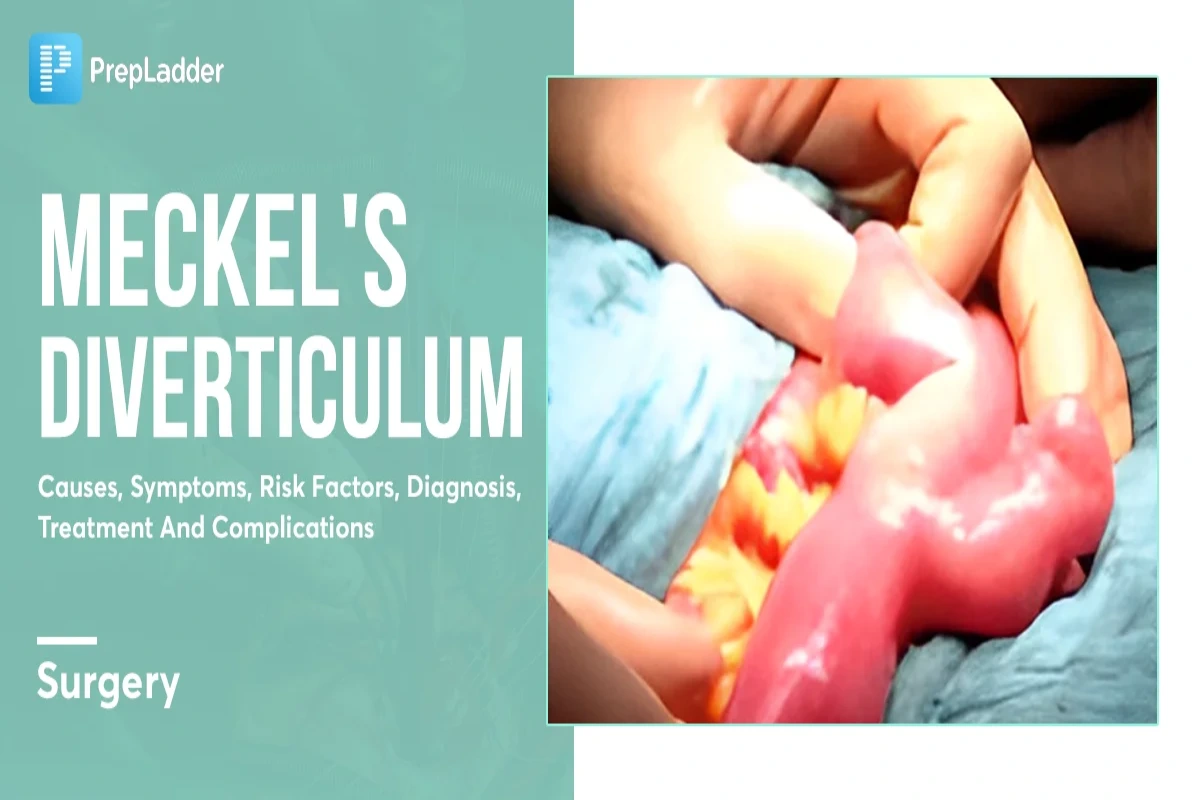
Meckel’s diverticulum – During the early embryonic period, the embryo consists of three layers: mesoblast, endoblast, and ectoblast. All these sheets converge anteriorly toward the umbilicus simultaneously. The midgut communicates with the umbilicus via the vitelline canal (omphalomesenteric canal), which disappears at the 10th week of embryonic life when the loops reintegrate into the abdomen.
The partial persistence of this channel is known as Meckel’s diverticulum. It is rare and found in approximately 2–4% of the population. It most often remains asymptomatic and is diagnosed incidentally, even when complications occur, such as gastrointestinal bleeding, intestinal obstruction, and intestinal intussusception. Other possible complications include Meckel’s diverticulitis, perforation, umbilical fistula, and tumor development.
Table of Contents
Introduction to the Disease
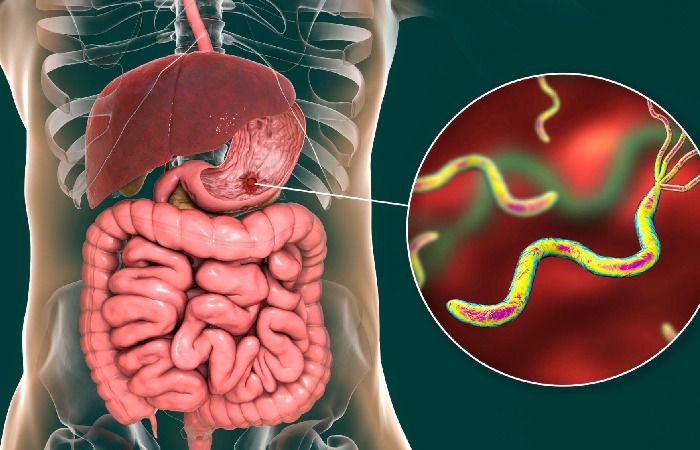
Meckel’s diverticulum is the partial persistence of the omphalomesenteric canal. It is a common congenital abnormality of the gastrointestinal tract, with a slight male predominance. It is encountered in approximately 2–4% of the population. Meckel’s diverticulum is usually asymptomatic and is diagnosed incidentally or when complications arise.
The diagnosis of bowel obstruction due to Meckel’s diverticulum may sometimes be suggested before surgery using abdominal ultrasound, technetium-99m scintigraphy, abdominal computed tomography, or magnetic resonance imaging (MRI).
Mechanical obstruction is the most common complication in adults and represents approximately 24–53% of complications. It may occur through different mechanisms, including volvulus, intussusception, fixation of the diverticulum at the umbilicus, or fixation at another point in the abdomen. The frequency of complications is slightly higher in men.
The location of Meckel’s diverticulum varies, generally occurring within 10 to 100 cm of the ileocecal valve in reported cases. Its dimensions are, on average, approximately 2 cm in diameter and 5 cm in length. The diverticulum may contain heterotopic mucosa, most commonly gastric-type mucosa, and sometimes pancreatic-type tissue.
Various Observations on Meckel’s Diverticulum and Crohn’s Disease
In this study, Meckel’s diverticulum was located 60 cm from the ileocecal valve, measured 5 cm in diameter and 8 cm in length, and contained gastric-type mucosa. During the study, the mean age was 29.8 years. There were eight cases of intestinal obstruction requiring ileal segmental resection involving Meckel’s diverticulum, followed by restoration of digestive continuity.
In the case presented, bowel resection involved removing Meckel’s diverticulum and restoring digestive continuity. Therefore, knowing how to consider the diagnosis within the broad group of acute or subacute intestinal obstructions is important, especially in young patients with no history of abdominal surgery. Meckel’s diverticulum can be challenging to identify despite advances in cross-sectional imaging.
Furthermore, recognizing the condition when evaluating acute abdominal pain is essential to help guide appropriate surgical management.
Meckel’s diverticulum can mimic Crohn’s disease because both conditions can present with recurrent cramping abdominal pain, bright red blood per rectum, and diarrhea. Meckel’s diverticulum and Crohn’s disease can therefore cause similar symptoms, making diagnosis challenging. However, several important differences between the two conditions can help doctors determine the most likely diagnosis.
Meckel’s Diverticulum Can Cause Symptoms
Meckel’s diverticulum is a small pouch that forms on the small intestine. It is usually found in the lower part of the abdomen, near the ileocecal region. Meckel’s diverticulum can cause symptoms when it becomes inflamed, infected, obstructed, or otherwise complicated.
Crohn’s disease is a chronic inflammatory bowel disease that can affect any part of the digestive tract. It is characterized by inflammation and ulcers in the lining of the digestive tract.
In addition to the symptoms mentioned above, Meckel’s diverticulum can cause nausea, vomiting, and fever. Crohn’s disease can cause weight loss, fatigue, and joint pain.
People living with digestive conditions or bowel-related surgery may also need to understand practical aspects of long-term digestive health. For individuals who have an ostomy, learning about strategies for a fulfilling and active life with an ostomy can provide useful information about adapting to daily activities and maintaining quality of life.
Maintaining adequate hydration is also important for overall health. Depending on the underlying condition and individual circumstances, people may experience fluid retention or changes in fluid balance. General information about ways to fight water retention may be useful for understanding factors that can contribute to swelling and fluid accumulation.
Conclusion
Meckel’s diverticulum is the partial persistence of the omphalomesenteric canal. It is rare and occurs in approximately 2–4% of the population. It usually remains asymptomatic and is diagnosed incidentally or when complications arise.
However, complications can occur, particularly when the diverticulum causes intestinal obstruction, bleeding, inflammation, or other acute abdominal problems. Therefore, knowing how to recognize Meckel’s diverticulum when diagnosing acute abdominal pain is important for guiding appropriate management. The outcome often depends on timely recognition and appropriate treatment.