
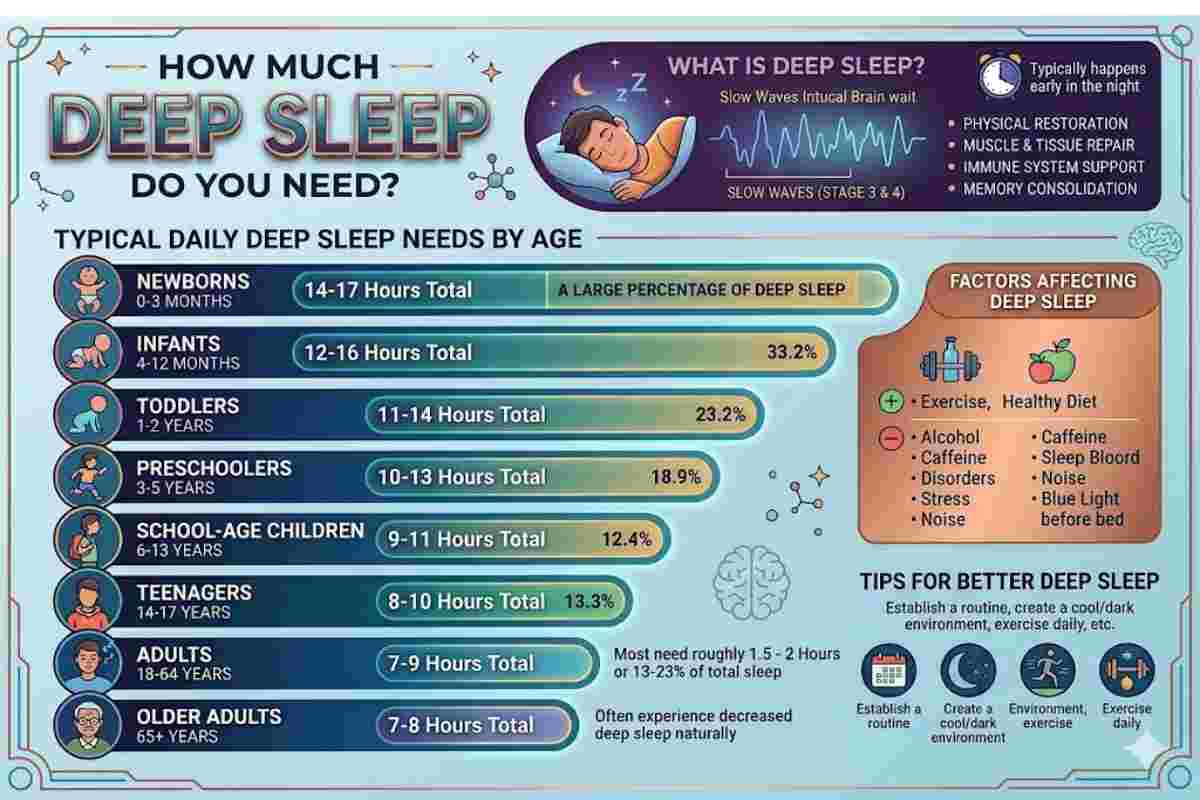
Sleep is not just about how many hours you spend in bed—it’s about the quality of that sleep. One of the most important stages is deep sleep, also known as slow-wave sleep. This stage is essential for physical recovery, brain performance, and long-term health. In the United States, health organizations emphasize that both total sleep time and deep sleep quality are crucial for maintaining overall wellness.
Deep sleep occurs during the non-REM stage of the sleep cycle and is when the body enters its most restorative phase. During this time, brain waves slow down, breathing becomes steady, and muscles fully relax. The body uses this stage to repair tissues, strengthen the immune system, and release growth hormones. Because of these processes, deep sleep plays a major role in helping you wake up refreshed and energized.
Table of Contents
What Is Deep Sleep?
Deep sleep is a specific stage of sleep. When we sleep, we move through multiple sleep cycles that last 90 to 120 minutes and are made up of four different stages. A typical night involves four or five sleep cycles.
During deep sleep, your brain waves slow down, which is why deep sleep is also called slow-wave sleep. At the same time, deep sleep brings significant relaxation to your muscles and a pronounced slowing of your pulse and breathing rate.
When you’re in the deep-sleep stage, it can be hard for someone to wake you up. If you do get awakened from deep sleep, you may experience a fogginess that can last up to an hour. That groggy feeling is called sleep inertia.
Deep Sleep Based on Total Sleep Duration
| Total Sleep Time | Deep Sleep Needed | Percentage |
| 6 hours | 36–72 minutes | 10–20% |
| 7 hours | 42–84 minutes | 10–20% |
| 8 hours | 48–96 minutes | 10–20% |
| 9 hours | 54–108 minutes | 10–20% |
As you age, your sleep patterns change. Deep sleep tends to decrease over time, but that doesn’t mean it becomes less important. In fact, maintaining good sleep quality becomes even more critical with age to support cognitive health and physical recovery.
Deep Sleep Requirements by Age Group
| Age Group | Total Sleep Needed | Deep Sleep Estimate |
| 18–25 years | 7–9 hours | 1.5–2 hours |
| 26–64 years | 7–9 hours | 1–2 hours |
| 65+ years | 7–8 hours | 30–90 minutes |
Sleep is divided into several stages that repeat throughout the night in cycles. Each cycle lasts around 90 minutes and includes light sleep, deep sleep, and REM sleep. Deep sleep typically occurs more in the early part of the night, while REM sleep becomes longer in later cycles.
Sleep Stages Overview
| Stage | Type | Percentage of Sleep | Main Function |
| N1 | Light sleep | ~5% | Transition to sleep |
| N2 | Light sleep | ~45% | Body slows down |
| N3 | Deep sleep | 10–25% | Physical recovery |
| REM | Dream sleep | 20–25% | Memory and brain function |
Deep sleep is often referred to as the most restorative stage of sleep. During this phase, the body repairs muscles, builds bone tissue, and strengthens the immune system. It also helps regulate hormones that control growth and stress. Without enough deep sleep, the body cannot fully recover from daily wear and tear.
From a mental perspective, deep sleep supports memory consolidation and learning. It allows the brain to organize information, process experiences, and prepare for the next day. People who consistently get enough deep sleep tend to have better focus, improved mood, and stronger cognitive performance.
Benefits of Deep Sleep
| Category | Benefits |
| Physical | Muscle repair, tissue growth |
| Immune System | Stronger defense against illness |
| Brain Function | Memory and learning improvement |
| Hormones | Balanced hormone production |
Not getting enough deep sleep can lead to noticeable problems in daily life. Even if you spend enough time in bed, poor-quality sleep can leave you feeling tired and unproductive. Over time, this can increase the risk of serious health conditions.
Effects of Deep Sleep Deficiency
| Short-Term Effects | Long-Term Effects |
| Fatigue | Heart disease |
| Poor concentration | Type 2 diabetes |
| Irritability | Obesity |
| Memory issues | Weak immune system |
Many factors influence how much deep sleep you get each night. Lifestyle habits, stress levels, and environmental conditions all play a role. For example, consuming caffeine late in the day or using electronic devices before bedtime can interfere with your ability to reach deep sleep.
Factors Affecting Deep Sleep
| Factor | Impact on Sleep |
| Stress | Reduces deep sleep |
| Alcohol | Disrupts sleep cycles |
| Caffeine | Delays sleep onset |
| Screen time | Affects melatonin levels |
| Age | Decreases deep sleep |
Improving deep sleep requires focusing on overall sleep hygiene rather than trying to control sleep stages directly. One of the most effective strategies is maintaining a consistent sleep schedule. Going to bed and waking up at the same time every day helps regulate your body’s internal clock.
Creating a comfortable sleep environment is also important. A cool, dark, and quiet room supports better sleep quality. Regular exercise can increase deep sleep, but it’s best to avoid intense workouts close to bedtime. Additionally, managing stress through relaxation techniques like meditation or breathing exercises can significantly improve sleep quality.
Tips to Improve Deep Sleep
| Strategy | Benefit |
| Fixed sleep schedule | Regulates body clock |
| Exercise | Increases deep sleep |
| Cool room | Promotes better sleep |
| Less screen time | Improves melatonin production |
| Stress management | Enhances sleep quality |
It’s also important to understand the difference between deep sleep and REM sleep. While deep sleep focuses on physical recovery, REM sleep is essential for brain activity, dreaming, and emotional processing. Both stages are necessary for overall health, and a healthy sleep cycle includes a balance of each.
Deep Sleep vs REM Sleep
| Feature | Deep Sleep | REM Sleep |
| Function | Physical recovery | Brain activity |
| Brain activity | Low | High |
| Dreams | Rare | Frequent |
| Importance | Body repair | Memory & learning |
In the United States, many adults do not get enough sleep, which directly affects deep sleep duration. Busy lifestyles, stress, and excessive screen use contribute to poor sleep quality. Experts recommend prioritizing sleep just as much as diet and exercise for long-term health.
Ultimately, most adults need about 1 to 2 hours of deep sleep each night, which equals roughly 10–20% of total sleep time. Instead of focusing only on numbers, it’s more important to ensure consistent, high-quality sleep habits. If you wake up feeling refreshed, stay alert throughout the day, and maintain good health, it’s a strong sign that your body is getting the deep sleep it needs.
Conclusion
How Much Deep Sleep Do You Need? – Deep sleep is a vital part of a healthy sleep cycle and plays a key role in both physical recovery and mental well-being. For most adults in the United States, getting about 1 to 2 hours of deep sleep per night, or roughly 10% to 20% of total sleep, is considered ideal. However, the exact amount can vary depending on age, lifestyle, and overall health.