
Table of Contents
Introduction
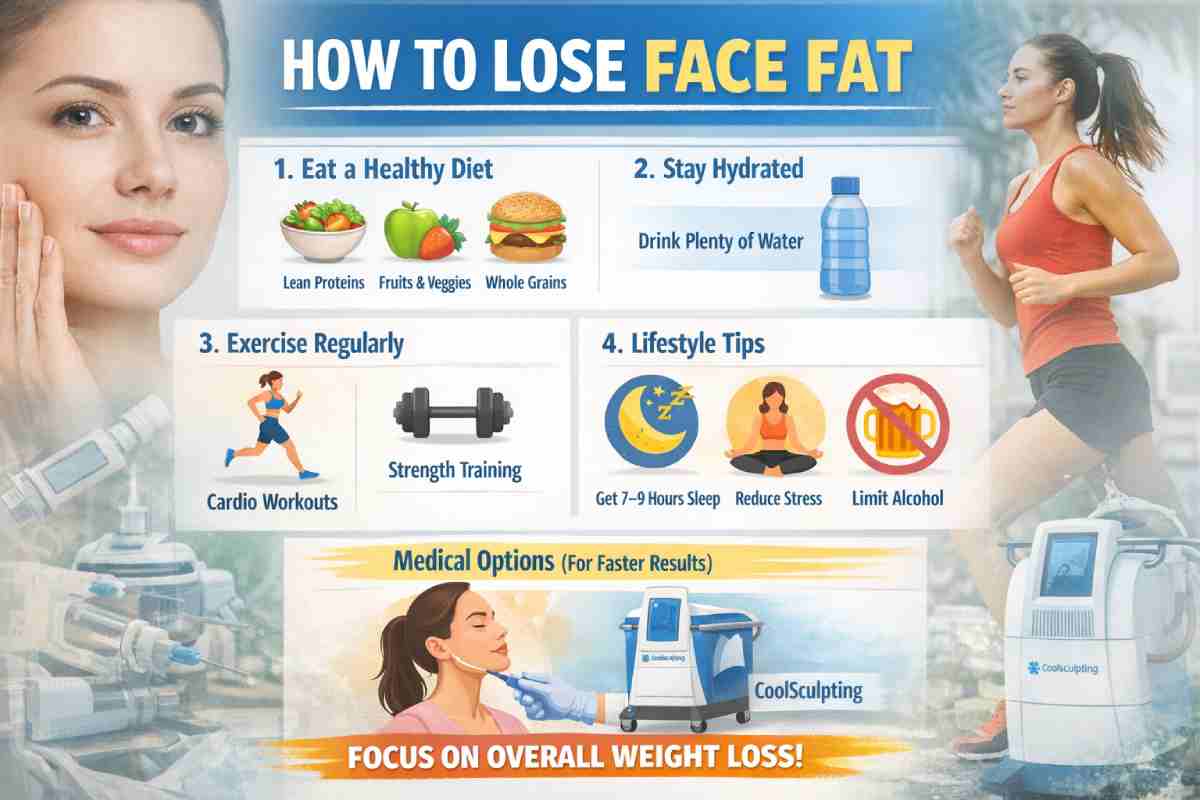
Face fat—often noticed as fuller cheeks, a double chin, or facial puffiness—is a common concern. Genetics play an important role in determining where the body stores fat, while overall body weight, diet, sodium intake, alcohol consumption, sleep, and physical activity can also affect facial appearance.
The key point is that you cannot selectively target fat loss from the face. When overall body fat decreases, some people may notice a slimmer facial appearance as well. However, the amount and speed of change vary from person to person.
Can You Lose Face Fat Specifically?
Scientific evidence does not support the idea of spot reduction, meaning that exercising one specific area does not necessarily cause the body to burn fat from that area.
| Factor | Explanation |
|---|---|
| Spot reduction | Not reliably supported by research |
| Calorie deficit | Important for overall fat loss |
| Body fat percentage | Can influence facial appearance |
| Genetics | Influences fat distribution and facial shape |
Creating a sustainable calorie deficit through an appropriate diet and regular physical activity can help reduce overall body fat. If you want to explore broader approaches, you can also read about methods to lose weight.
Best Diet Plan to Reduce Face Fat
Diet is an important part of managing overall body weight and body fat. Instead of following a highly restrictive diet, focus on a balanced eating pattern that provides adequate protein, fiber, vitamins, minerals, and other nutrients.
| Food Type | Examples | Potential Benefit |
|---|---|---|
| High-fiber foods | Oats, beans, vegetables | Supports fullness |
| Lean protein | Chicken, fish, eggs | Supports muscle maintenance |
| Whole grains | Brown rice, quinoa | Provides fiber and energy |
| Fruits | Berries, apples | Nutrient-dense and naturally sweet |
| Water | Water and other unsweetened fluids | Supports hydration |
Foods to Limit
There is no specific food that directly causes face fat, but regularly consuming large amounts of highly processed foods, sugary drinks, alcohol, and high-sodium foods can make weight management more difficult or contribute to temporary water retention.
| Category | Examples | Possible Effect |
|---|---|---|
| Processed foods | Chips, processed meals | May be high in calories and sodium |
| Sugary drinks | Soda, sweetened beverages | Adds calories with little satiety |
| Alcohol | Beer, cocktails | Adds calories and may contribute to puffiness |
| High-sodium foods | Fast food, processed foods | May increase temporary water retention |
For most adults, keeping sodium intake within recommended limits can support cardiovascular health and may help reduce excessive fluid retention.
Hydration and Face Fat
Staying adequately hydrated supports normal body functions, but drinking water does not directly burn facial fat.
Adequate hydration may help some people feel fuller when water replaces high-calorie beverages. It can also help maintain normal fluid balance.
| Hydration Habit | Potential Impact |
|---|---|
| Drinking water regularly | Supports normal hydration |
| Replacing sugary drinks | Can reduce calorie intake |
| Staying adequately hydrated | Supports normal fluid balance |
There is no universal requirement that everyone drink exactly 2–3 liters of water each day. Fluid needs vary depending on body size, activity, climate, diet, and health conditions.
Best Exercises to Lose Face Fat
Exercise cannot specifically burn fat from the face, but regular physical activity can contribute to overall fat loss and improved fitness.
| Exercise Type | Examples | General Recommendation |
|---|---|---|
| Cardio | Running, cycling, brisk walking | Regular weekly activity |
| Strength training | Weight lifting, resistance exercises | At least 2 days per week for many adults |
| HIIT | Sprint or interval training | Can be included according to fitness level |
A combination of cardiovascular activity and strength training can support overall health, fitness, and body-composition goals.
Facial Exercises and Face Yoga
Facial exercises have been promoted as a way to improve facial appearance, but there is limited evidence that they can directly reduce facial fat.
They may work the muscles of the face and neck, but exercising these muscles does not necessarily cause the body to burn fat from the face.
| Exercise | Target Area | Potential Benefit |
|---|---|---|
| Cheek puff | Cheeks | Exercises facial muscles |
| Jaw release | Jaw area | Promotes facial movement |
| Fish face | Cheeks | Engages facial muscles |
| Chin lifts | Chin and neck | Engages neck and facial muscles |
Facial exercises should therefore be viewed as optional muscle-conditioning activities rather than a proven fat-loss method.
Lifestyle Changes That Impact Facial Appearance
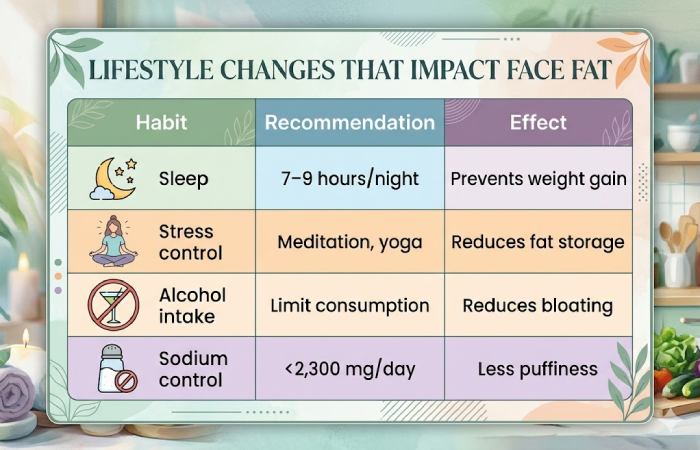
Daily habits can influence both overall weight and temporary facial puffiness.
| Habit | Recommendation | Potential Effect |
|---|---|---|
| Sleep | Aim for adequate sleep | Supports appetite and overall health |
| Stress management | Meditation, yoga, relaxation | Supports healthy lifestyle habits |
| Alcohol intake | Limit consumption | May reduce excess calories and puffiness |
| Sodium intake | Stay within recommended limits | May reduce excessive fluid retention |
Poor sleep can affect appetite regulation and food choices, while chronic stress may make healthy eating and regular exercise more difficult. Maintaining consistent sleep and stress-management habits can therefore support overall weight management.
Medical and Cosmetic Treatments in the United States
People who have localized areas of unwanted fat or loose skin may consider cosmetic procedures. These treatments do not replace healthy lifestyle habits and are not appropriate for everyone.
Common options include injectable treatments, cryolipolysis, liposuction, and skin-tightening procedures. Availability, cost, results, risks, and eligibility vary considerably.
| Treatment | Type | Typical Considerations |
|---|---|---|
| Kybella | Injectable treatment | Used for moderate to severe submental fat in appropriate patients |
| CoolSculpting | Non-invasive fat reduction | Uses controlled cooling to target fat cells |
| Liposuction | Surgery | Removes localized fat through a surgical procedure |
| Ultherapy | Skin tightening | Uses ultrasound energy to target tissue and improve skin firmness |
Kybella contains deoxycholic acid and is used to improve the appearance of moderate to severe fat beneath the chin in appropriately selected adults. Results and the number of treatments required vary.
CoolSculpting, or cryolipolysis, uses controlled cooling to target fat cells. It is not a treatment for general weight loss and may not be appropriate for every type of facial fullness.
Anyone considering a cosmetic procedure should consult a qualified, appropriately licensed medical professional to discuss benefits, risks, alternatives, and expected results.
Specialists in the U.S.
Different professionals can help depending on the underlying concern.
| Specialist Type | Role |
|---|---|
| Dermatologists | Evaluate skin and certain non-surgical cosmetic treatments |
| Plastic surgeons | Evaluate surgical and cosmetic procedures |
| Registered dietitians | Provide individualized nutrition guidance |
| Qualified fitness professionals | Help develop appropriate exercise programs |
If facial fullness is sudden, unexplained, or associated with swelling elsewhere in the body, it may be better to consult a healthcare professional rather than assuming that it is caused by body fat.
Products That Help With Weight Management
No cream, roller, supplement, or other consumer product can selectively burn facial fat.
Some products are marketed as “fat burners” or weight-loss aids, but their effectiveness and safety can vary. Supplements should not be considered a substitute for a balanced diet and regular physical activity.
| Product Type | Examples | Important Consideration |
|---|---|---|
| Weight-loss supplements | Various formulations | Evidence and safety vary |
| Protein powders | Whey and plant proteins | Can help meet protein needs |
| Green tea products | Tea or extracts | Effects on weight are generally modest |
| Facial rollers | Jade or other rollers | May temporarily improve the appearance of puffiness |
If you are considering prescription or other medical approaches to weight management, learn more about weight loss medication and discuss your options with a qualified healthcare professional.
Reviews and Real User Feedback
Online discussions often reflect personal experiences rather than scientific evidence. Many people report that they noticed changes in facial appearance after losing overall body weight, while others report that their face changes more slowly than other parts of their body.
This difference is normal because genetics, age, body composition, and individual fat distribution influence where fat is stored and lost.
Common User Experiences
| Method | Commonly Reported Experience |
|---|---|
| Diet + exercise | Supports overall weight management |
| Adequate hydration | May reduce the appearance of temporary puffiness |
| Sodium reduction | May help some people with fluid-related puffiness |
| Facial exercises | May exercise facial muscles but are not proven to burn facial fat |
Personal experiences should not be treated as proof that a particular method will produce the same result for everyone.
Country-Wise Availability of Treatments
Cosmetic fat-reduction and skin-tightening treatments are available in many countries, but regulations, providers, pricing, and approved uses vary.
| Country | General Availability | Cost Level |
|---|---|---|
| United States | Widely available | Varies |
| Canada | Available | Varies |
| UK | Available | Varies |
| India | Available through qualified providers | Varies |
| Australia | Available | Varies |
Before undergoing any procedure, verify that the treatment is approved or authorized for its intended use in your country and that the provider is appropriately qualified.
How Long Does It Take to Lose Face Fat?
There is no guaranteed timeline for facial fat loss. The face may become slimmer as overall body fat decreases, but the rate of change differs among individuals.
| Approach | General Consideration |
|---|---|
| Diet + exercise | Changes usually occur gradually |
| Hydration changes | Puffiness may change within days in some situations |
| Cosmetic treatments | Results depend on the treatment and individual response |
| Surgical procedures | Results develop during recovery and healing |
Rather than focusing on a specific number of weeks, aim for sustainable changes in body weight and health.
Common Mistakes to Avoid
| Mistake | Why It Can Be a Problem |
|---|---|
| Crash dieting | Can be difficult to sustain and may cause nutrient deficiencies |
| Excessive restriction of sodium | Is unnecessary for most people and may be inappropriate for some |
| Skipping sleep | Can negatively affect appetite, mood, and recovery |
| Expecting quick results | Facial changes vary between individuals |
| Relying on facial exercises alone | They cannot selectively remove facial fat |
| Using unproven supplements | May provide little benefit and can have risks |
Face Fat vs. Facial Bloating
Facial fullness is not always caused by body fat. Temporary puffiness can result from fluid retention, sleep changes, dietary factors, alcohol, allergies, or other causes.
| Feature | Facial Fat | Facial Bloating/Puffiness |
|---|---|---|
| Possible Cause | Body-fat distribution | Fluid retention or other factors |
| Duration | Generally longer-term | Can be temporary |
| Management | Overall weight management | Depends on the underlying cause |
Sudden or persistent facial swelling should be evaluated by a healthcare professional, especially when it is accompanied by difficulty breathing, severe pain, rash, or swelling elsewhere.
FAQs
Can chewing gum reduce face fat?
No. Chewing gum exercises the jaw muscles but does not selectively burn facial fat.
Does drinking water slim your face?
Drinking enough water supports normal hydration and may help with temporary puffiness in some circumstances, but it does not directly burn facial fat.
Why is my face fuller while the rest of my body is slim?
Genetics, natural facial structure, age, body-fat distribution, and temporary fluid retention can all influence facial appearance. Persistent or sudden swelling may have other causes and should be discussed with a healthcare professional.
Conclusion
Losing face fat is not about quick fixes or miracle products. Because spot reduction is not reliably supported, the most practical approach is to focus on sustainable habits that support overall health and healthy body weight.
A balanced calorie-controlled diet, regular physical activity, adequate sleep, appropriate hydration, and moderation of alcohol and highly processed foods can all contribute to healthy weight management. These habits may gradually lead to a slimmer facial appearance as overall body fat decreases.
For people considering medical or cosmetic options, treatments such as Kybella, cryolipolysis, or liposuction may be appropriate in selected cases, but they have different risks, benefits, costs, and eligibility requirements. A qualified medical professional can help determine whether a particular treatment is suitable.
For those considering medical approaches to weight management, understanding weight loss medication can provide additional information about treatment options and why professional guidance is important.
Ultimately, sustainable lifestyle changes remain the foundation of healthy weight management and can benefit not only facial appearance but also overall health and long-term well-being.