
Hummus has become one of the most popular healthy dips in the United States, found everywhere from grocery stores to restaurants. With the rise of plant-based diets and Mediterranean-style eating, hummus is often promoted as a nutritious alternative to traditional dips like ranch or cheese-based spreads.
But is hummus actually good for you? The answer is yes—when consumed in moderation and made with quality ingredients. In this comprehensive guide, we’ll break down the nutrition, benefits, risks, and expert insights based on U.S.-focused dietary recommendations.
Table of Contents
What Is Hummus Made Of?
Hummus is a simple yet nutrient-dense dip made from:
- Chickpeas (garbanzo beans)
- Tahini (sesame paste)
- Olive oil
- Lemon juice
- Garlic
These ingredients align closely with the Mediterranean diet, widely recommended in the United States for heart health. (Healthline)
Nutritional Profile of Hummus
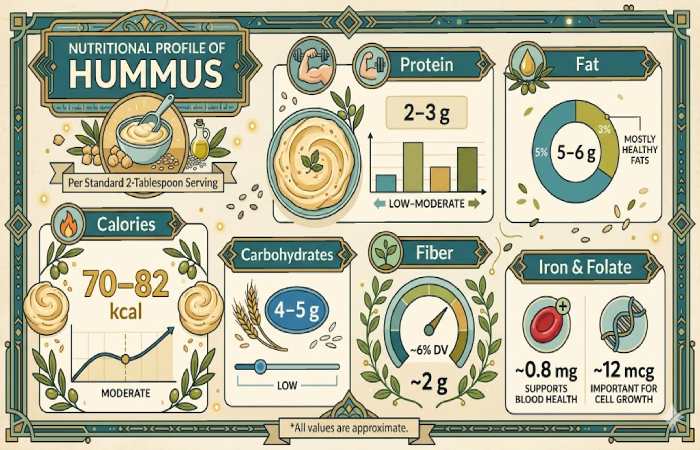
A standard 2-tablespoon serving of hummus contains:
| Nutrient | Amount (Approx.) | U.S. Daily Value Contribution |
|---|---|---|
| Calories | 70–82 kcal | Moderate |
| Protein | 2–3 g | Low–moderate |
| Fat | 5–6 g | Mostly healthy fats |
| Carbohydrates | 4–5 g | Low |
| Fiber | ~2 g | ~6% DV |
| Iron | ~0.8 mg | Supports blood health |
| Folate | ~12 mcg | Important for cell growth |
Hummus provides fiber, plant-based protein, and essential minerals like magnesium, iron, and folate. (Healthline)
Health Benefits of Hummus
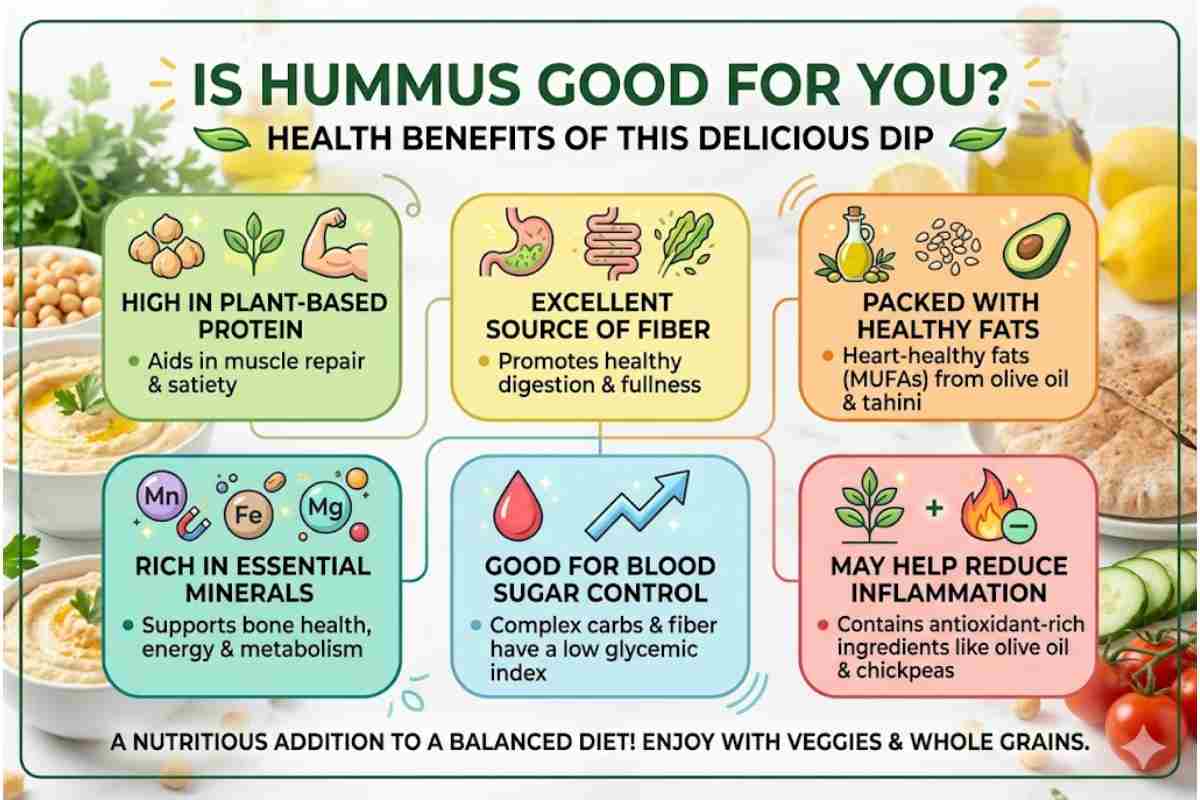
1. Supports Heart Health
Hummus contains olive oil and sesame (tahini), both rich in unsaturated fats. These fats help:
- Lower LDL (bad cholesterol)
- Reduce inflammation
- Improve cardiovascular health
Studies show replacing unhealthy fats with olive oil can reduce heart disease risk.
2. Improves Digestive Health
Chickpeas are high in dietary fiber, which:
- Promotes regular bowel movements
- Feeds beneficial gut bacteria
- Supports colon health
Fiber in hummus may also produce butyrate, a compound beneficial for gut cells.
3. Helps Manage Blood Sugar
Hummus has a low glycemic index, meaning it:
- Releases sugar slowly into the bloodstream
- Prevents spikes in blood glucose
- Is suitable for people with diabetes
This makes it a better snack option compared to refined-carb dips.
4. Aids Weight Management
Hummus is filling due to its combination of:
- Fiber
- Healthy fats
- Protein
These nutrients help reduce appetite and calorie intake over time.
5. Plant-Based Protein Source
In the U.S., where plant-based diets are increasing, hummus offers:
- Meat alternative protein
- Essential nutrients for vegetarians
- Iron and folate support
Is Hummus Good for Weight Loss?
Hummus can support weight loss—but portion control matters.
| Factor | Effect on Weight |
|---|---|
| High fiber | Keeps you full longer |
| Healthy fats | Increase satiety |
| Calories | Can add up quickly |
| Pairing | Veggies = better choice |
Is Hummus Good for Diabetics?
Yes—hummus is considered a diabetes-friendly food in the U.S.
| Feature | Benefit |
|---|---|
| Low GI | Prevents blood sugar spikes |
| Fiber content | Slows digestion |
| Healthy fats | Stabilize glucose levels |
Potential Downsides of Hummus
While healthy, hummus isn’t perfect.
Common Concerns:
| Issue | Explanation |
|---|---|
| High calories | Olive oil & tahini increase energy density |
| Sodium (store-bought) | Some U.S. brands contain excess salt |
| Allergies | Sesame (tahini) can trigger reactions |
| Digestive issues | Chickpeas may cause bloating in some people |
Always read labels when buying packaged hummus in the U.S.
Store-Bought vs Homemade Hummus (U.S.)
| Feature | Store-Bought | Homemade |
|---|---|---|
| Convenience | High | Moderate |
| Sodium | Often higher | Controlled |
| Preservatives | May contain | None |
| Taste | Consistent | Customizable |
| Nutrition | Varies by brand | Typically healthier |
Experts in the U.S. recommend choosing clean-label hummus with minimal ingredients.
Hummus vs Other Popular Dips
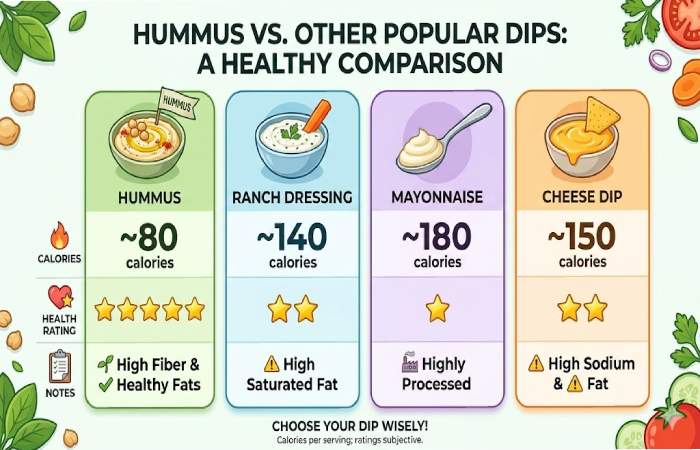
| Dip Type | Calories | Health Rating | Notes |
|---|---|---|---|
| Hummus | ~80 | 4 Stars | High fiber & healthy fats |
| Ranch Dressing | ~140 | 2 Stars | High saturated fat |
| Mayonnaise | ~180 | 1 Star | Highly processed |
| Cheese Dip | ~150 | 2 Stars | High sodium & fat |
Hummus is clearly one of the healthiest dip options available in the U.S.
Best Foods to Eat with Hummus
Healthy pairings commonly recommended in the United States:
- Raw vegetables (carrots, celery, bell peppers)
- Whole-grain crackers
- Pita bread
- Sandwich spreads
How Much Hummus Should You Eat Daily?
According to U.S. nutrition experts:
- Recommended serving: 2–4 tablespoons per day
- Ideal as a snack or meal addition
- Avoid overeating due to calorie density
🇺🇸 Is Hummus Popular in the United States?
Hummus has seen rapid growth in the U.S. due to:
- Rising vegan and vegetarian diets
- Increased awareness of healthy eating
- Mediterranean diet popularity
It is now a mainstream grocery staple in America.
What Do U.S. Nutrition Experts Say?
Dietitians in the United States generally agree:
✔ Hummus is a nutrient-dense food
✔ It’s healthier than processed dips
✔ Best consumed in moderation
They also emphasize:
- Pair with vegetables
- Watch sodium levels
- Choose simple ingredient versions
Pros and cons
Yes—hummus is good for you.
Pros:
- Rich in fiber, healthy fats, and nutrients
- Supports heart, digestive, and metabolic health
- Ideal for plant-based diets
Cons:
- Can be calorie-dense
- Store-bought versions may contain high sodium
Here are the SEO enhancements for your article:
Conclusion
Hummus stands out as one of the healthiest and most versatile dips available in the United States today. Made from nutrient-rich ingredients like chickpeas, tahini, and olive oil, it offers a powerful combination of fiber, healthy fats, and plant-based protein that supports heart health, digestion, and overall well-being.
While hummus provides numerous health benefits, it’s important to consume it in moderation due to its calorie density. Choosing fresh, homemade versions or clean-label store-bought options can further enhance its nutritional value.
Overall, when paired with wholesome foods like vegetables or whole grains, hummus can be a smart and delicious addition to a balanced American diet.