
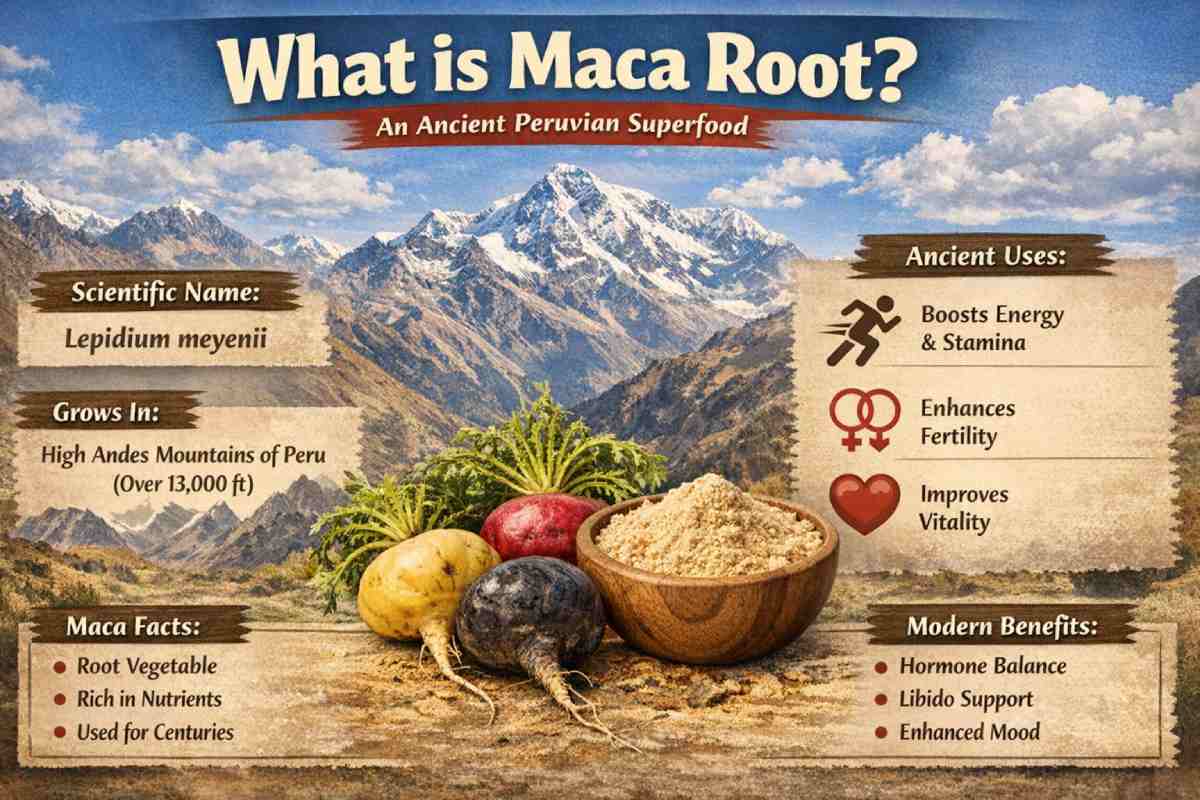
Maca has become a popular natural supplement in the wellness world. Often called “Peruvian ginseng,” maca root comes from the plant Lepidium meyenii, which grows in the high Andes of Peru. Indigenous communities have traditionally used maca as a food and medicinal plant, particularly in connection with energy, stamina, fertility, and overall vitality.
Today, maca is commonly consumed as powder, capsules, or extracts and may be added to smoothies, oatmeal, protein drinks, and other foods. The root contains carbohydrates, protein, fiber, minerals, amino acids, and plant compounds that contribute to its nutritional profile.
This article explores maca benefits, its nutritional value, potential uses, possible side effects, and considerations for including maca in your diet. While some research is promising, many of the proposed health benefits still require larger and better-designed human studies.
Table of Contents
What Is Maca Root?
Maca is a cruciferous plant related to vegetables such as broccoli, cabbage, and kale. It grows at high elevations in the Peruvian Andes, where it has been cultivated and consumed for centuries.
Traditionally, maca was dried or cooked and used as a food. Modern research has examined its possible effects on sexual health, fertility, mood, energy, and symptoms associated with menopause.
Although some studies have reported promising findings, maca should not be considered a proven treatment for medical conditions.
Nutritional Value of Maca Root
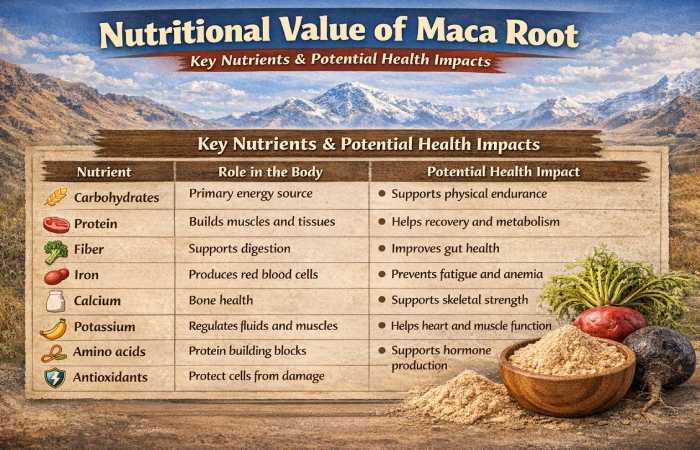 Maca powder provides a combination of carbohydrates, protein, fiber, and minerals. The exact nutritional content can vary depending on the variety of maca, growing conditions, processing method, and product.
Key Nutrients in Maca Root
| Nutrient | Role in the Body | Potential Contribution |
|---|---|---|
| Carbohydrates | Provide energy | Contribute to daily energy intake |
| Protein | Builds and maintains tissues | Supports normal muscle and tissue function |
| Fiber | Supports digestion | Contributes to healthy bowel function |
| Iron | Helps produce hemoglobin | Supports normal oxygen transport |
| Calcium | Supports bones and teeth | Contributes to skeletal health |
| Potassium | Helps regulate fluids and muscles | Supports normal muscle and nerve function |
| Amino acids | Building blocks of proteins | Support normal protein production |
| Plant compounds | Participate in antioxidant activity | May help protect cells from oxidative stress |
A serving of maca powder can contribute small amounts of protein, fiber, minerals, and other nutrients to the diet. However, maca should be viewed as one food or supplement rather than a replacement for a varied diet.
Top Maca Benefits
Many people use maca supplements for energy, sexual health, fertility, or general wellness. Here are some of the areas researchers have studied.
1. Energy and Stamina
One traditional use of maca is to support energy and physical stamina. Some research has explored whether maca supplementation may improve perceived energy or exercise performance.
However, evidence remains limited, and more controlled human research is needed before maca can be considered an established performance-enhancing supplement.
Energy and Stamina
| Area | What Research Suggests |
|---|---|
| Physical endurance | May support perceived stamina in some people |
| Fatigue | May influence feelings of energy |
| Exercise performance | Evidence remains limited |
| Stress adaptation | Sometimes described as an adaptogenic effect, although evidence is still developing |
Unlike caffeine, maca does not act as a conventional stimulant. Individual responses can vary depending on the product, dose, and person’s overall health.
2. Libido and Sexual Health
One of the better-known traditional uses of maca involves sexual health. Several small studies have investigated whether maca may increase sexual desire in men and women.
Some research has reported improvements in sexual desire, including among certain people experiencing sexual difficulties. However, studies have generally been small, and results are not sufficient to establish maca as a treatment for sexual dysfunction.
Sexual Health and Maca
| Potential Area | Research Status |
|---|---|
| Sexual desire | Some small studies report improvements |
| Sexual satisfaction | Possible benefit, but evidence is limited |
| Erectile function | Research is preliminary |
| Sexual arousal | Some studies suggest potential benefits |
More large-scale clinical trials are needed to determine how effective maca is for different types of sexual health concerns.
3. Male Fertility
Maca has also been studied for its possible effects on male reproductive health.
Some research suggests maca supplementation may influence sperm concentration or semen quality. However, findings have been inconsistent, and it is not established that maca improves pregnancy rates or treats male infertility.
Maca and Male Fertility
| Fertility Factor | Possible Effect |
|---|---|
| Sperm concentration | May improve in some studies |
| Semen quality | Preliminary evidence of potential benefit |
| Sperm motility | Findings are mixed |
| Reproductive health | Requires further investigation |
Anyone experiencing fertility problems should seek an appropriate medical evaluation rather than relying on supplements alone.
4. Hormonal Health
Maca is sometimes described as an adaptogenic herb and is commonly marketed for hormonal balance. However, claims that maca directly balances or regulates hormones are not firmly established.
Some studies suggest maca may influence symptoms associated with hormonal changes without necessarily acting like a hormone replacement. More research is needed to understand these effects.
Hormonal Health
| Area | Current Evidence |
|---|---|
| Hormonal symptoms | Some preliminary research |
| Menstrual symptoms | Evidence remains limited |
| Reproductive health | Being investigated |
| Stress response | Possible but not well established |
Maca should not be used as a substitute for medical treatment of diagnosed hormonal disorders.
5. Menopause Symptoms
Menopause can cause symptoms such as hot flashes, sleep changes, mood changes, and reduced libido. Some small studies have investigated whether maca may help with certain menopause-related symptoms.
The results are promising but not conclusive. More research is needed to determine whether maca provides meaningful benefits compared with established treatments.
Maca and Menopause
| Symptom | Potential Effect |
|---|---|
| Hot flashes | Possible reduction in some studies |
| Mood changes | May influence perceived well-being |
| Sleep problems | Evidence is limited |
| Low libido | Some studies report potential improvement |
Maca is not a replacement for hormone therapy or other treatments prescribed by a healthcare professional.
6. Mood and Mental Well-Being
Maca contains plant compounds, including polyphenols and flavonoids, that have been investigated for their biological effects.
Some research has explored maca’s potential relationship with mood and psychological well-being, particularly among postmenopausal women. However, evidence is still limited and does not establish maca as a treatment for depression or anxiety.
Mental Well-Being
| Area | Research Status |
|---|---|
| Mood | Preliminary evidence |
| Anxiety | Limited evidence |
| Cognitive function | More research is needed |
| Stress | Potential but not established |
Anyone experiencing persistent anxiety, depression, or other mental health symptoms should seek professional care.
7. Heart Health
Preliminary research has examined whether maca may influence cardiovascular factors such as blood pressure.
Some small studies have reported changes in blood pressure among certain participants, but there is not enough evidence to conclude that maca prevents or treats hypertension or heart disease.
Maca does contain minerals such as potassium, but the amount obtained from a typical supplement serving may not be enough to produce a major cardiovascular effect.
Cardiovascular Research
| Factor | Current Evidence |
|---|---|
| Blood pressure | Preliminary research |
| Antioxidant activity | Possible contribution from plant compounds |
| Potassium | Contributes to normal muscle and nerve function |
| Heart disease prevention | Insufficient evidence |
People taking medication for blood pressure or cardiovascular conditions should speak with a healthcare professional before adding concentrated supplements.
8. Immune Health
Maca contains plant compounds and nutrients that contribute to its nutritional profile. Some laboratory research has investigated antioxidant and other biological activities of maca compounds.
However, there is currently insufficient human evidence to say that maca strengthens the immune system or prevents infections.
A balanced diet containing a variety of fruits, vegetables, whole grains, protein foods, and other nutrient-rich foods remains more important for supporting overall health.
How to Use Maca
Maca is available in several forms, making it relatively easy to incorporate into meals or use as a supplement.
Common Forms of Maca
| Form | Common Uses |
|---|---|
| Maca powder | Smoothies, oatmeal, yogurt, and baking |
| Capsules | Convenient supplement format |
| Extracts | More concentrated preparations |
| Maca flour | Cooking and baking |
Research studies have used different amounts of maca, so there is no single universally established dose for every purpose. Some studies have used approximately 1.5–3 grams per day, but the appropriate amount can depend on the product and individual circumstances.
Always follow the manufacturer’s directions and avoid assuming that a higher dose will provide greater benefits.
Possible Side Effects of Maca
Maca appears to be tolerated by many people when consumed in typical food or supplement amounts, but long-term safety data are limited.
Some people may experience digestive symptoms or other unwanted effects.
Potential Side Effects
| Possible Side Effect | Description |
|---|---|
| Digestive discomfort | May include bloating or stomach upset |
| Sleep changes | Some people may experience difficulty sleeping |
| Headache or other symptoms | Individual reactions can vary |
| Hormone-related concerns | Caution may be appropriate for certain conditions |
If you develop unusual or persistent symptoms after starting maca, stop using the supplement and discuss the symptoms with a healthcare professional.
Who Should Be Cautious With Maca?
Certain people should seek professional advice before using maca supplements.
Safety Considerations
| Group | Reason for Caution |
|---|---|
| Pregnant people | Safety data are limited |
| Breastfeeding people | Insufficient research |
| People with hormone-sensitive conditions | Effects on hormonal pathways are not fully understood |
| People with thyroid conditions | Medical guidance may be appropriate |
| People taking medications | Potential interactions should be considered |
Anyone with a medical condition or taking prescription medication should discuss new supplements with a healthcare professional before using them regularly.
Maca Benefits vs. Other Adaptogens
Maca is often grouped with other herbal products marketed as adaptogens. However, these supplements are chemically different and should not be assumed to have identical effects.
Maca vs. Popular Adaptogens
| Supplement | Commonly Marketed For | Evidence Considerations |
|---|---|---|
| Maca | Energy and sexual health | Research is promising but limited |
| Ashwagandha | Stress and relaxation | Evidence varies by use |
| Rhodiola | Fatigue and exercise performance | Some research supports specific uses |
| Ginseng | Energy and general vitality | Evidence varies by preparation and purpose |
Combining multiple supplements is not necessarily better and may increase the chance of side effects or interactions.
Maca is also often discussed alongside other wellness ingredients. For example, readers interested in botanical supplements can explore Green Tea Extract to learn about its compounds and potential applications.
Maca and a Balanced Diet
Maca can be incorporated into a balanced eating pattern through smoothies, oatmeal, yogurt, baked foods, or other recipes. However, it should complement rather than replace nutrient-rich whole foods.
For example, foods containing B vitamins play important roles in energy metabolism, nervous-system function, and other normal bodily processes. Learn more about Vitamin B and foods containing B vitamins as part of a broader approach to nutrition.
It is also important to distinguish between a whole-food ingredient such as maca powder and concentrated extracts or supplements. The amount of active compounds can vary considerably between products.
Conclusion
Maca root has a long history as a traditional food and medicinal plant in the Andes. Modern research has investigated its potential effects on energy, sexual health, fertility, menopause-related symptoms, and mood, but many of these areas still require larger and better-designed human studies.
Maca may be a useful addition to a balanced diet for some people, but it should not be considered a cure or replacement for medical treatment. Choosing reputable products, following recommended serving instructions, and discussing supplementation with a healthcare professional when appropriate can help reduce potential risks.
Used responsibly, maca can be considered one option among many for supporting overall nutrition and wellness.