
Table of Contents
Green Tea Extract: Benefits, Antioxidant Effects, and Skin Health
Green tea is enjoyed around the world as a popular hot and cold beverage and accounts for a significant share of tea consumed globally. It is made from the leaves of the Camellia sinensis plant and contains a variety of naturally occurring compounds that have been studied for their antioxidant, anti-inflammatory, and antimicrobial properties.
Green tea extract is a concentrated form of these compounds and is used in dietary supplements as well as skincare products. Research has investigated its potential effects on oxidative stress, inflammation, UV-related skin damage, acne, and other skin concerns.
Chemical Components of Green Tea
Green tea contains a variety of bioactive compounds. In addition to amino acids, it provides small amounts of minerals such as magnesium and calcium, plant compounds, fatty acids, and several vitamins.
The potential benefits of green tea are largely associated with its polyphenols, particularly catechins. Catechins make up a substantial portion of the polyphenols found in green tea. One of the most extensively studied catechins is epigallocatechin-3-gallate (EGCG).
Other important components of green tea include caffeine, organic acids, proteins, chlorophyll, and theanine.
The combination of these compounds contributes to the biological activity of green tea and green tea extracts.
A woman in a white dress holds a straw hat in her right hand and brushes through green tea leaves with her left hand.
Effect of Green Tea Extract and Its Application in Dermatology
Green tea extract has attracted interest in dermatology because of its polyphenol content, particularly EGCG. These compounds can interact with various cellular pathways involved in oxidative stress and inflammation.
Green Tea Extract as an Antioxidant
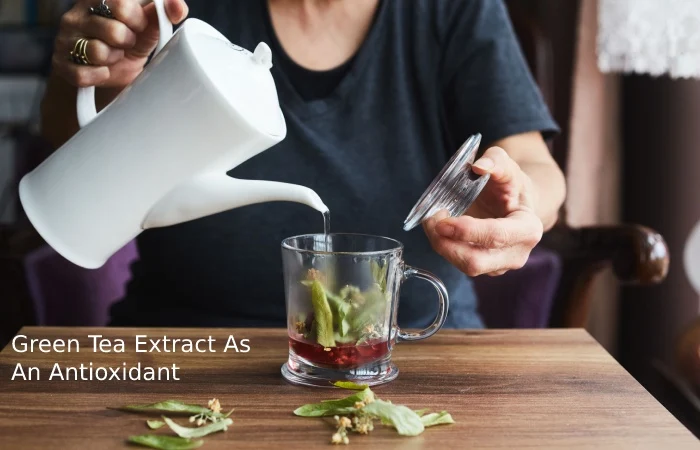
Oxidative stress occurs when reactive molecules, including free radicals and reactive oxygen species (ROS), overwhelm the body’s antioxidant defenses. In the skin, oxidative stress can contribute to inflammation and cellular damage and is associated with processes such as photoaging.
Green tea polyphenols have antioxidant activity and can interact with reactive oxygen species and certain metal ions. Because of these properties, green tea extract has been studied as a potential ingredient for supporting the skin’s defenses against environmental stress.
Green tea is also a source of several nutrients and plant compounds, while other foods provide important vitamins needed for overall health. For example, foods containing B vitamins can contribute to normal energy metabolism and other bodily functions. Learn more about Vitamin B and its role in a balanced diet.
The Light Protection Effect
Green tea polyphenols have been investigated for their potential photoprotective effects. Laboratory and some human studies suggest that topical green tea compounds may help reduce certain forms of UV-related oxidative stress and inflammation.
Some research has found that topical application of green tea extracts may reduce UV-induced skin redness and cellular damage. Green tea compounds have also been studied for their potential effects on immune cells within the skin.
However, green tea extract should not be considered a replacement for sunscreen. Broad-spectrum sunscreen, protective clothing, shade, and other sun-protection measures remain important for reducing UV exposure.
The evidence surrounding green tea and skin protection is promising, but more research is needed to determine the extent of its protective effects in everyday use.
Green Tea Extract and Inflammatory Skin Diseases
Green tea polyphenols have antioxidant and anti-inflammatory properties that have been investigated in connection with several inflammatory skin conditions.
Topical green tea extracts may interact with inflammatory pathways and the skin’s microbiome. Some studies suggest that these compounds could help support the skin’s response to environmental and inflammatory stress, although the effectiveness can vary depending on the formulation and concentration used.
Rosacea and Acne
In addition to its antioxidant properties, green tea extract has been studied for its potential anti-inflammatory and antimicrobial effects.
Acne involves several factors, including excess sebum production, clogged pores, inflammation, and changes in the skin microbiome. Some research suggests that topical green tea preparations may help reduce sebum production and inflammation, which could make them a useful complementary ingredient in skincare for some people.
Green tea extract may also be of interest for people with oily skin because of its potential sebum-regulating properties. However, it should not be considered a standalone treatment for moderate or severe acne.
People with persistent acne or rosacea should consider speaking with a dermatologist, especially when symptoms are painful, widespread, or leaving scars.
Green Tea Extract and Overall Wellness
Green tea extract is often discussed alongside other plant-based ingredients and supplements. While green tea contains naturally occurring compounds such as catechins and caffeine, the effects of concentrated extracts can differ from those of drinking green tea.
Other popular plant-based ingredients are also commonly discussed for their potential nutritional and wellness applications. For example, you can learn more about Maca benefits and how maca is commonly used.
It is also important to distinguish between traditional foods and beverages and highly concentrated supplements. Products containing concentrated green tea extract can provide substantially different amounts of certain compounds than a normal cup of green tea.
Conclusion
Green tea extract contains polyphenols, including EGCG, that have antioxidant and anti-inflammatory properties. Research has investigated its potential role in supporting skin health, reducing oxidative stress, and complementing skincare approaches for concerns such as acne and photoaging.
Although the findings are encouraging, green tea extract should not be viewed as a cure for skin conditions or as a replacement for established treatments such as sunscreen or dermatologist-recommended acne therapies.
As with other supplements and concentrated botanical products, the quality, dosage, and formulation can affect how the product is used. Readers interested in emerging wellness ingredients can also explore What Is Kiolopobgofit Used For? for additional information about another supplement-related topic.